
 Expeditions Unlimited blog
Ama Dablam, to which we dedicate an entire guide, is the third most sought-after summit in the Khumbu region, after Island Peak and Lobuche Peak. The majority of permits are issued during autumn. However, Ama Dablam lends itself to climbing during two main seasons, or even a third — winter — for the most ambitious. You wish to follow in Hillary's footsteps, armed with your physical and technical preparation — now is the time to choose your season and get down to business!
Spring (mi-avril-mai)
In spring, from mid-March to mid-May, mornings are fine and clear, while afternoons see the weather cloud over with snowfall of varying amounts and a sharp drop in temperatures. This is because heat rises very significantly over northern India, creating strong daytime evaporation which leads to this precipitation. The days are long, which favours progression. After mid-May, the weather becomes much more unstable, with daily snowfall increasing in volume, making the ascent difficult. At this time of year, the Everest ascent draws the greatest number of mountaineers and Ama Dablam is less in demand (70% fewer climbers compared to autumn). Choosing spring is recommended if your priority is above all to avoid the crowds.
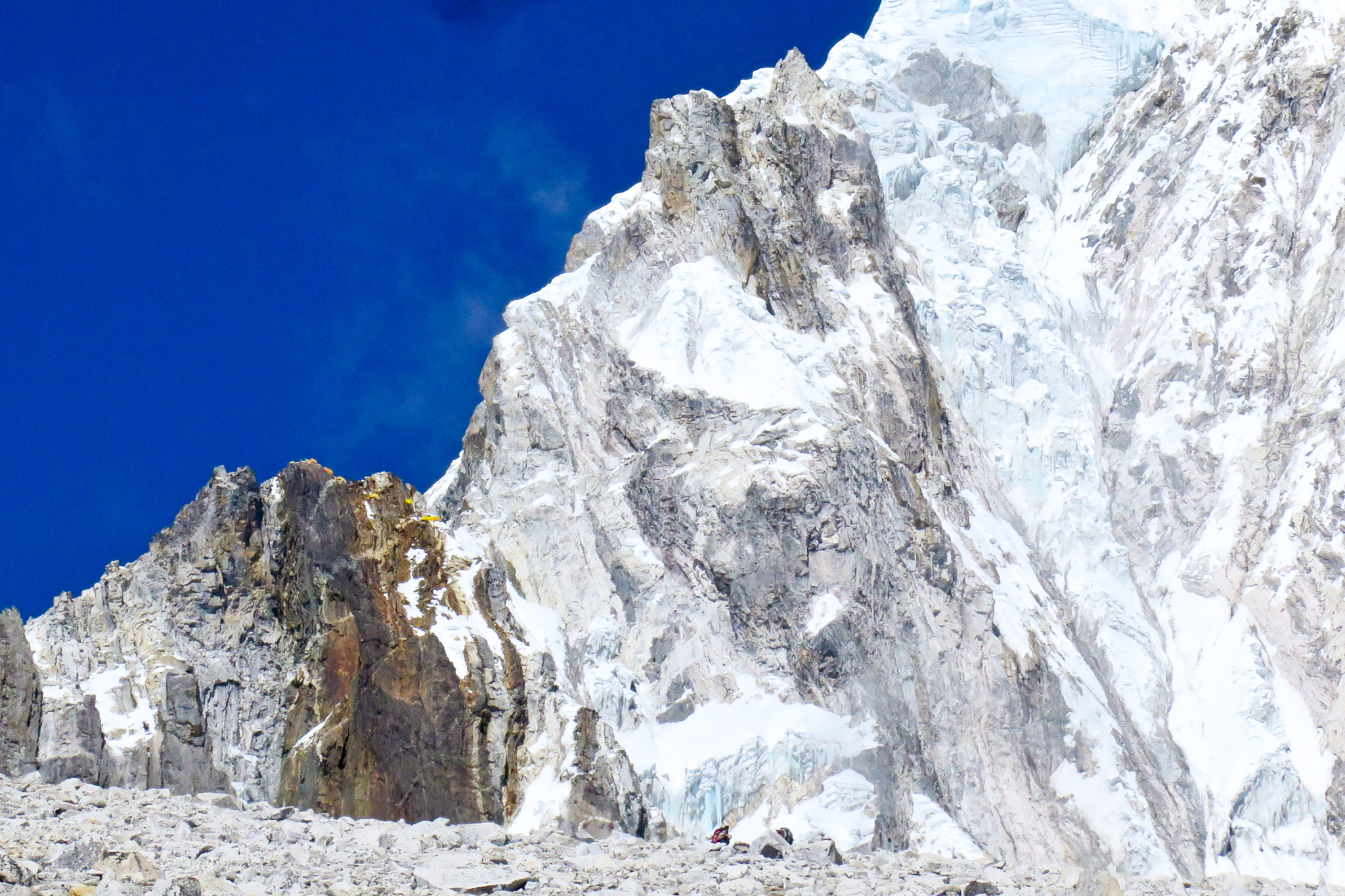
© Bruno Serraz
Autumn (septembre – novembre)
Autumn is the most sought-after season. It runs from mid-October to the end of November and attracts a great many mountaineers. Be prepared to encounter several rope teams, which complicates the setting up of high-altitude camps and passing one another on the fixed ropes. It is the most stable and predictable season from a meteorological standpoint. The days are shorter and temperatures lower than in spring (particularly at night, between -15 and -20°), but the cold is a guarantee of stable weather. The only risk at this time of year: typhoons that develop in October-November over the Bay of Bengal. They generally track northward towards China, but occasionally drift westward and reach Nepal, causing heavy precipitation within a matter of hours.
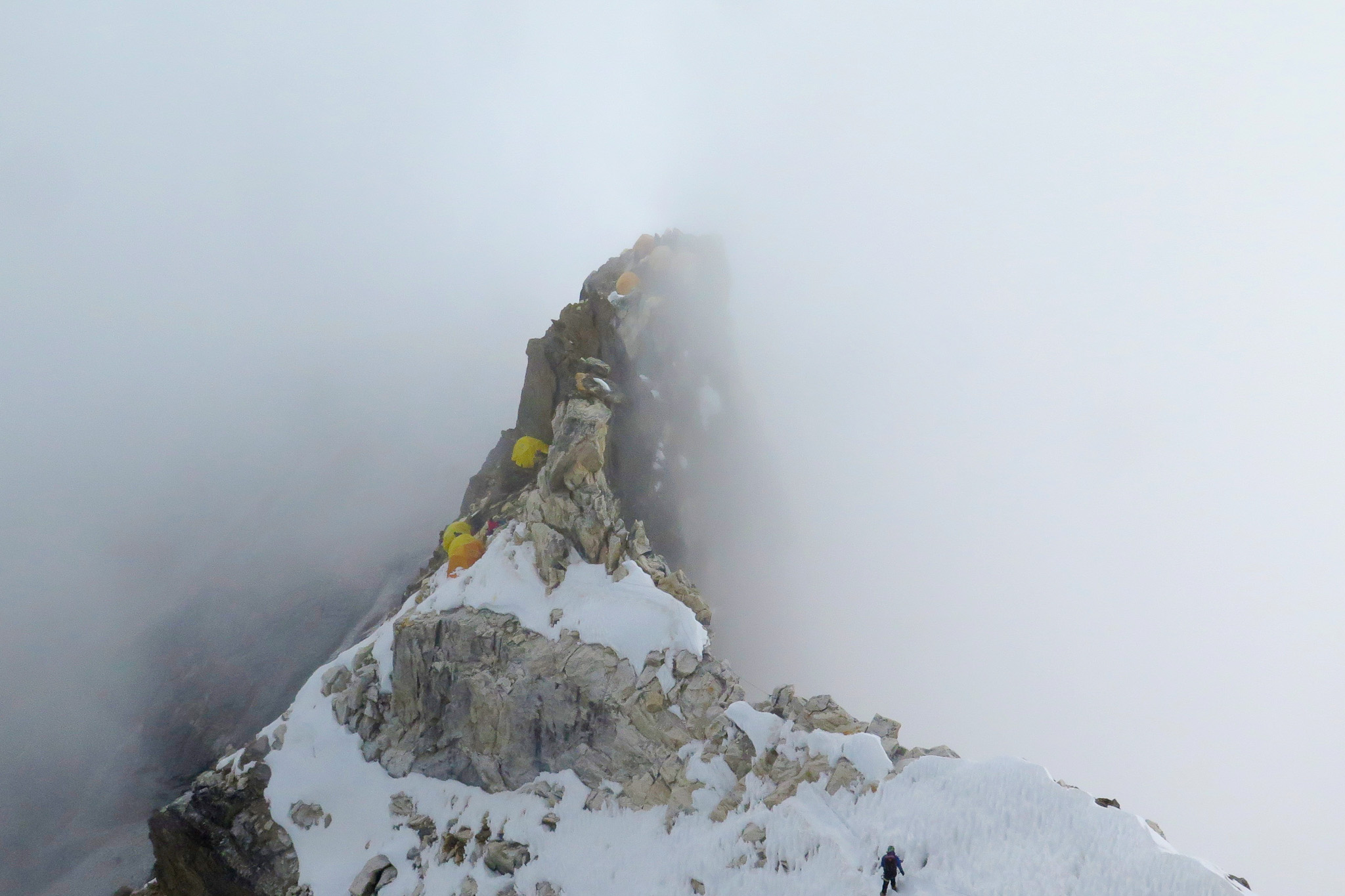
© Bruno Serraz
Winter (21 décembre au 20 mars)
Although the first ascent of Ama Dablam was completed in the middle of winter, this season proves difficult due to the intense cold and violent winds. A winter ascent is reserved for those who relish challenges — professionals or very experienced mountaineers.
