
 Expeditions Unlimited blog
Technical, physical, mental and hygiene skills are essential for climbing Ama Dablam, to which we devote this complete feature, as for any great summit. The correct use of fixed ropes, mastery of abseiling techniques, prior experience at high altitude and excellent physical fitness are essential to face the challenges of the ascent. Social isolation and rigorous hygiene to avoid falling ill complete the prerequisites for being able to aspire to reach this magnificent summit. In this article you will find all our preparation advice so that you can calmly approach your acclimatisation trek to the Ama Dablam base camp and then set off on its ascent.
Technical skills for climbing Ama Dablam
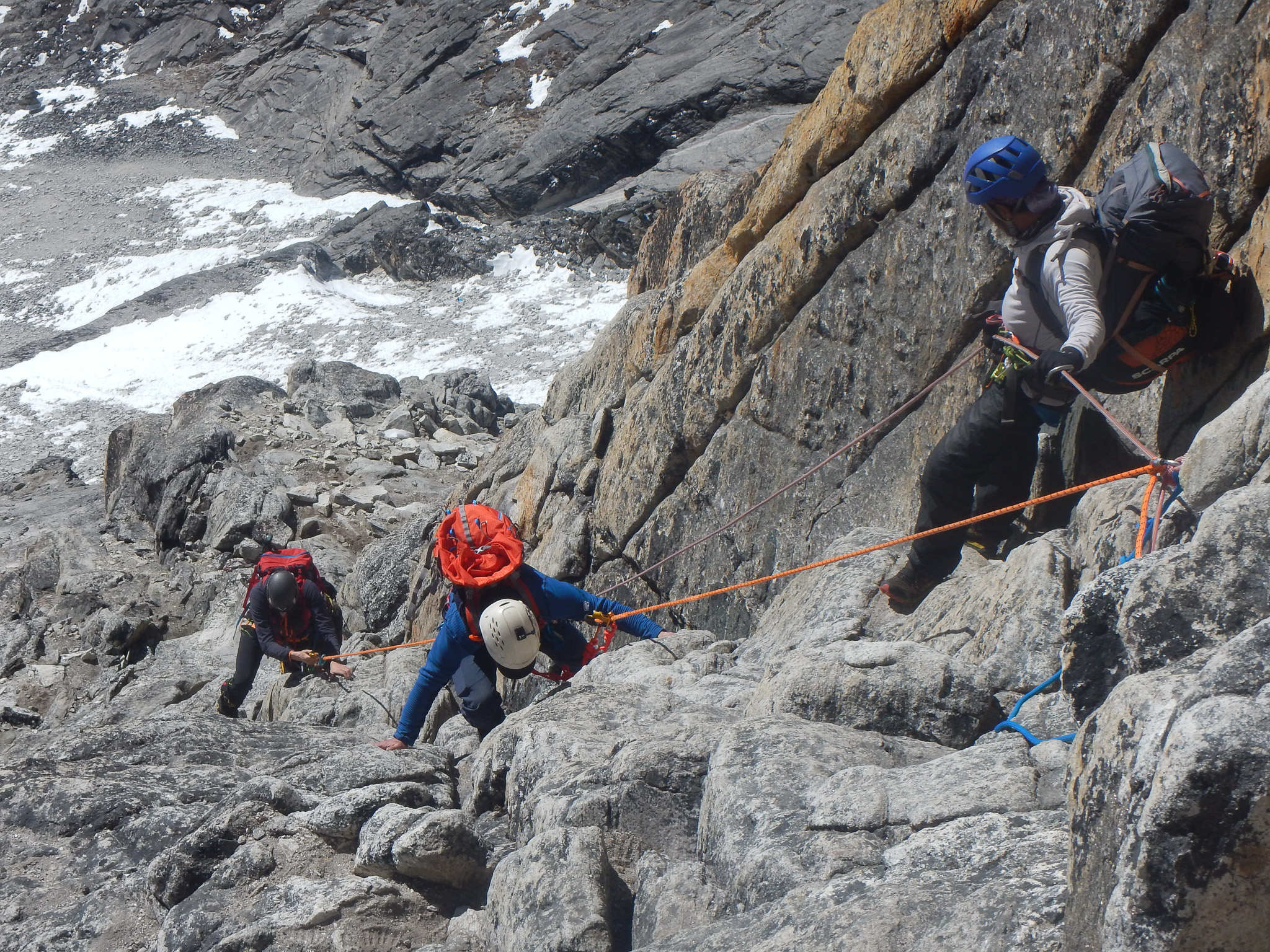
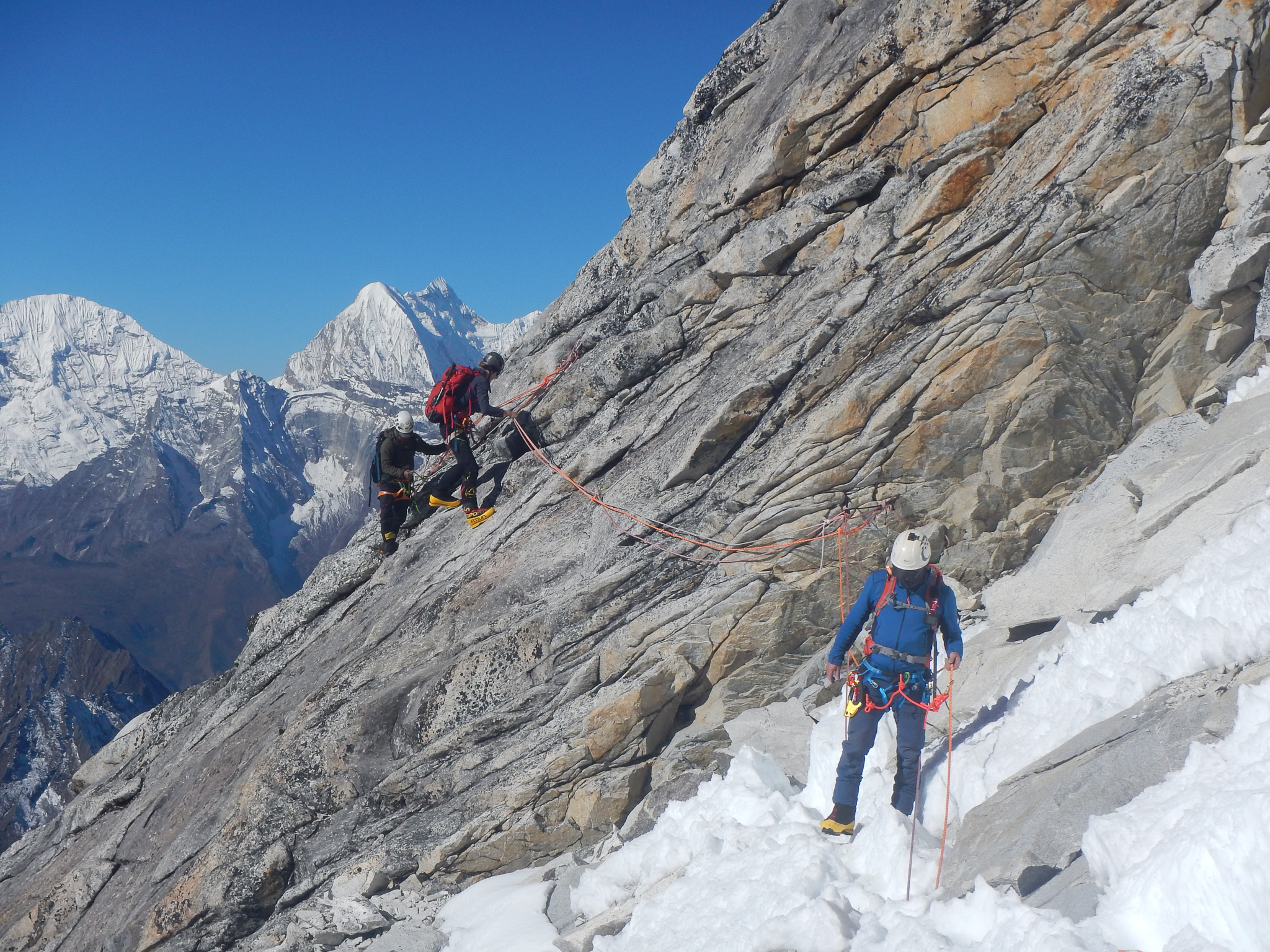
All the major commercial expeditions use the south-west ridge route. The Ama Dablam expedition, without the use of fixed ropes, is graded IV/D+ on the Himalayan scale, mixed: rock (V+/6a), snow and ice. The correct use of fixed ropes and mastery of abseiling techniques on exposed terrain are crucial to minimise risks and reduce the difficulty. In addition, prior experience at high altitude between 4000 and 6000 metres is required. It is important to take into account the impact of altitude, of carrying a backpack and of the ever-present cold. Success rests on technical mastery, endurance and team spirit.
This expedition involves vertical pitches on mixed terrain across rock, ice and snow. You must be in excellent physical and mental condition to undertake this ascent. Do not underestimate its difficulty. This climb will probably be one of the hardest you have ever attempted. However, the breathtaking beauty and the exhilarating experience of reaching this summit are well worth it.
© Mark Jennison
Physical preparation
Excellent physical fitness is essential to face the challenges of the ascent. Training should focus on endurance, core strengthening and weight training in order to improve resistance and stability. Good experience gained on other climbs in the Alps and a sound knowledge of progression techniques using an ascender (jumar) on the way up, and using a descender for the way down, is a real plus. The better your physical condition, the greater your chances of success for the summit push, especially if this has to be done from Camp 2.
Among the recommended exercises: long-distance running, cycling and hikes with a load, long outings on mixed terrain in the Alps. Ideally, begin your preparation at least three months before departure to optimise your performance at high altitude.
Strategies for staying healthy at high altitude
While the conditions of the ascent now have little in common with those faced by the conquerors of 1961, it is essential to follow a few basic guidelines to stay in good shape.
Maintaining rigorous hygiene is essential to preserve your well-being and that of your companions. Wash your hands before every meal with the hot water provided by the kitchen team and disinfect them after each visit to the toilet. Use an antibacterial gel if necessary.
Each morning, if possible, carry out a quick wash with hot water available in the tent. Favour a cloth or sponge to avoid wetting the inside of your tent.
And in the weeks leading up to your expedition, practise a little social isolation. In Kathmandu, avoid crowded places to minimise the risk of germs, pay attention to your food, that it is of good quality and cleaned. Finally, drink bottled water.
© Mark Jennison
Success rate on Ama Dablam
Statistics on the number of climbers setting off on the slopes of Ama Dablam and those who reach the summit are not easily accessible. In 2018, around 200 mountaineers reached the summit.
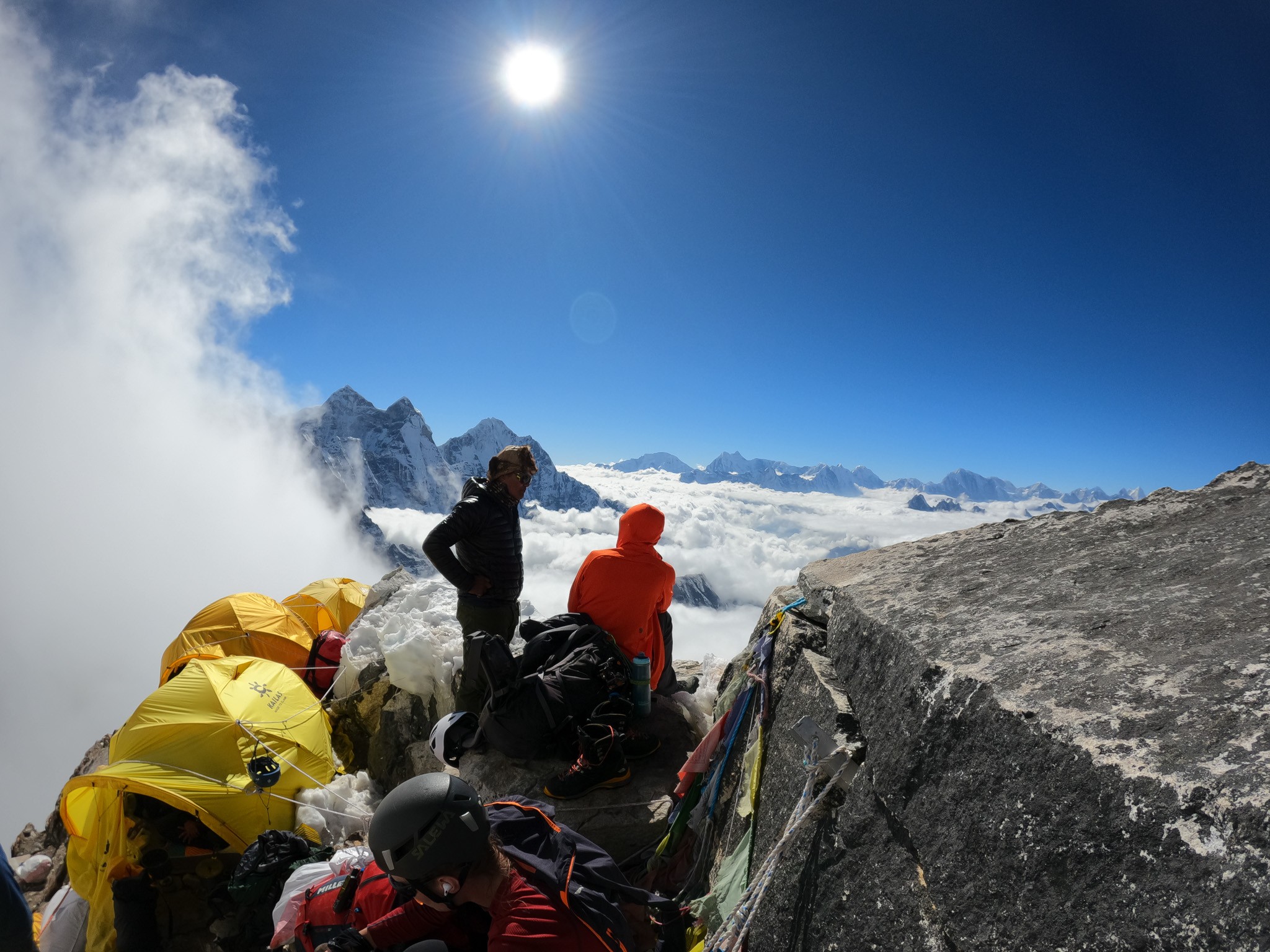
The overall success rate of ascents on Ama Dablam is estimated at between 60 and 75%, depending on the season and weather conditions. This relatively high percentage contrasts with that of Everest, which reaches only 29%, despite the technical challenges common to the summits of the region.
© Mark Jennison
To conclude, which summit to consider after Ama Dablam?
Successfully completing the ascent of Ama Dablam is a fine technical feat that calls for willpower and determination. Success opens the door to very high altitude. A good next step would be a slightly technical 7000 metre peak.
Here are all our 7000-metre summits
It is also conceivable to attempt a small 8000-metre peak such as Manaslu in Nepal or Cho Oyu in Tibet before considering, why not, that of the Roof of the World: Everest!
