
 Expeditions Unlimited blog
© Bruno Serraz
As part of our complete feature on Ama Dablam, in this article we look at the various approach treks to the base camp at 4600 metres, an essential moment of the ascent: getting back into physical shape, acclimatisation, mental preparation.
Once you have chosen the climbing period and carried out meticulous physical and mental preparation, you have just landed in Kathmandu... The ascent of Ama Dablam begins with a classic trek from Lukla, passing through Namche Bazaar and Pangboche before reaching the base camp. This route allows gradual acclimatisation and offers spectacular panoramas, notably from the Tengboche monastery.
To improve acclimatisation, alternative routes exist, including the Everest base camp trek or the ascent of Lobuche Peak.
Beyond the base camp, the ascent requires two or three high-altitude camps. Camp 3, although close to the summit, is exposed to avalanches, prompting some mountaineers to attempt the final ascent from Camp 2, which demands excellent physical fitness.
Classic trekking route to reach the base camp
To reach the Ama Dablam base camp, there is one main trekking route that most mountaineers take. This route starts from Lukla and passes through Namche Bazaar and Pangboche before reaching the base camp. For trekking enthusiasts, the view of Ama Dablam is a highlight of the trek towards the Everest base camp. The village of Tengboche, at the foot of Ama Dablam, is known for its Buddhist monastery, which offers a spectacular view of the summit, particularly at sunrise. This route allows mountaineers to acclimatise gradually to the altitude. They also prepare themselves physically and mentally to take on the challenges that await them.
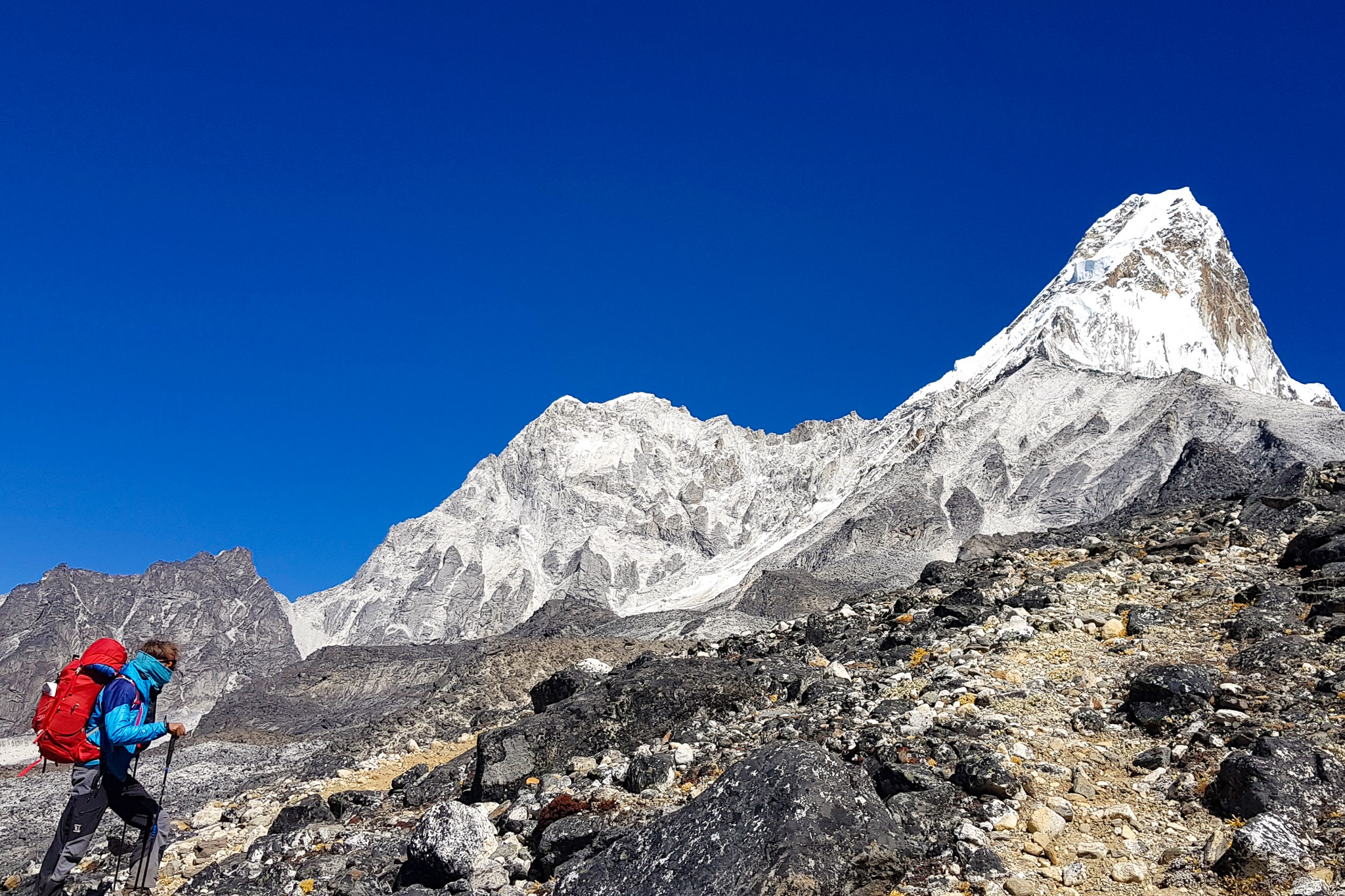
© Bruno Serraz
Alternative approach routes to the base camp
Embarking on an expedition to Ama Dablam requires good physical preparation and good acclimatisation. The "classic" route described above consists of covering the trek from Lukla to the Ama Dablam base camp in six days. To improve your acclimatisation, you can first follow the Everest and Ama Dablam base camp trek, or even complete the ascent of Lobuche Peak.
© Mark Jennison
Two or three high-altitude camps?
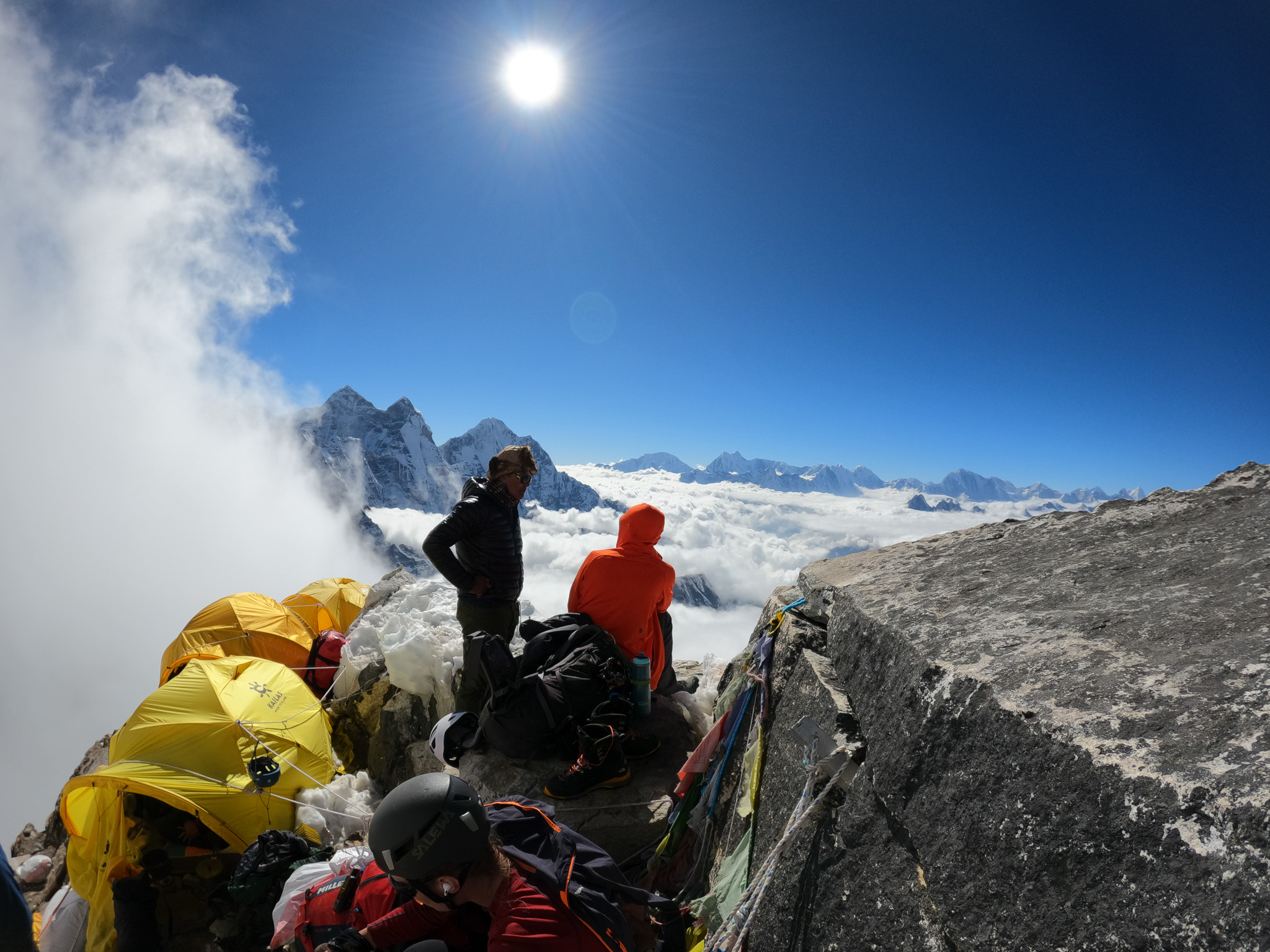
Camp 1 and especially Camp 2, set up on the rocky south-west ridge, are well sheltered from objective hazards and avalanches. Camp 3, located at the end of the south-west ridge, lies at the foot of the snowy face that leads to the summit. Four hundred metres high, this face can be prone to avalanches and Camp 3 is exposed to them. Very cramped, it allows only a limited number of tents to be set up. To reach the summit in good conditions, it is preferable to set off from this Camp 3, which also ensures a descent in good conditions, although it is rather advised to return to Camp 2. Because of the limited number of tent spots and the possible risk of avalanches, some mountaineers choose to set off from Camp 2 for the summit push. This involves a long final ascent starting from Camp 2 and demands perfect physical condition.
