
 Expeditions Unlimited blog
To reach the summit of Ama Dablam, to which we dedicate a complete guide, three high-altitude camps are used: from base camp to Camp 1 (5900 m), Camp 2 (6100 m), Camp 3 (6400 m), before starting the summit push to 6812 meters, with progression on slopes inclined between 55 and 65 degrees. The ascent itself represents only half of the journey. It is then essential to descend as low as possible to spend the night. You have chosen your season to climb Ama Dablam, you know which trek route you will take to reach base camp, discover in this article the ascent route to the summit.
Ama Dablam base camp (4600 m)
After a few days of trekking, we reach the village of Pangboche. It is located a few hours from Ama Dablam base camp, nestled at 4529 meters altitude. This camp, set on lush green terrain at the foot of the majestic mountain, serves as a comfortable residence throughout the duration of the ascent. A phone relay situated near the base camp provides a decent internet connection. In addition, an old shepherd's hut, converted into a welcoming tea-house, is located a short distance from base camp. It is a great place for climbers to gather over a hot drink.
© Bruno Serraz
Base camp – Camp 1 (5900 m)
The ascent from Ama Dablam base camp to Camp 1 takes approximately 5 to 6 hours. Along the way, you pass close to a first possible camp (5500 m), but water resources there are limited. Some teams use it for acclimatisation, while others simply bypass it. The route towards Camp 1 crosses a zone of rocky blocks and an exposed ridge, generally dry in autumn. It is essential to stay on the path and gain height progressively, resisting the temptation to drop down onto less rugged terrain, as this leads to unnecessary effort. These climbing sections remain manageable for experienced climbers, but can prove tricky to negotiate for the less accustomed, or in snowy conditions. Unstable blocks and slippery slabs have caught more than a few climbers off guard. Just below Camp 1, slabs mark the beginning of the fixed rope lines. Most climbers progress without roping up, but when in doubt, it is always safer to do so. Fatigue is the main challenge on this section, and the use of an ascender to progress along the fixed ropes to Camp 1 already proves very useful. The technical section amounts to approximately two to three rope lengths (100 m). A helmet is essential, especially if other climbers are ahead of you.
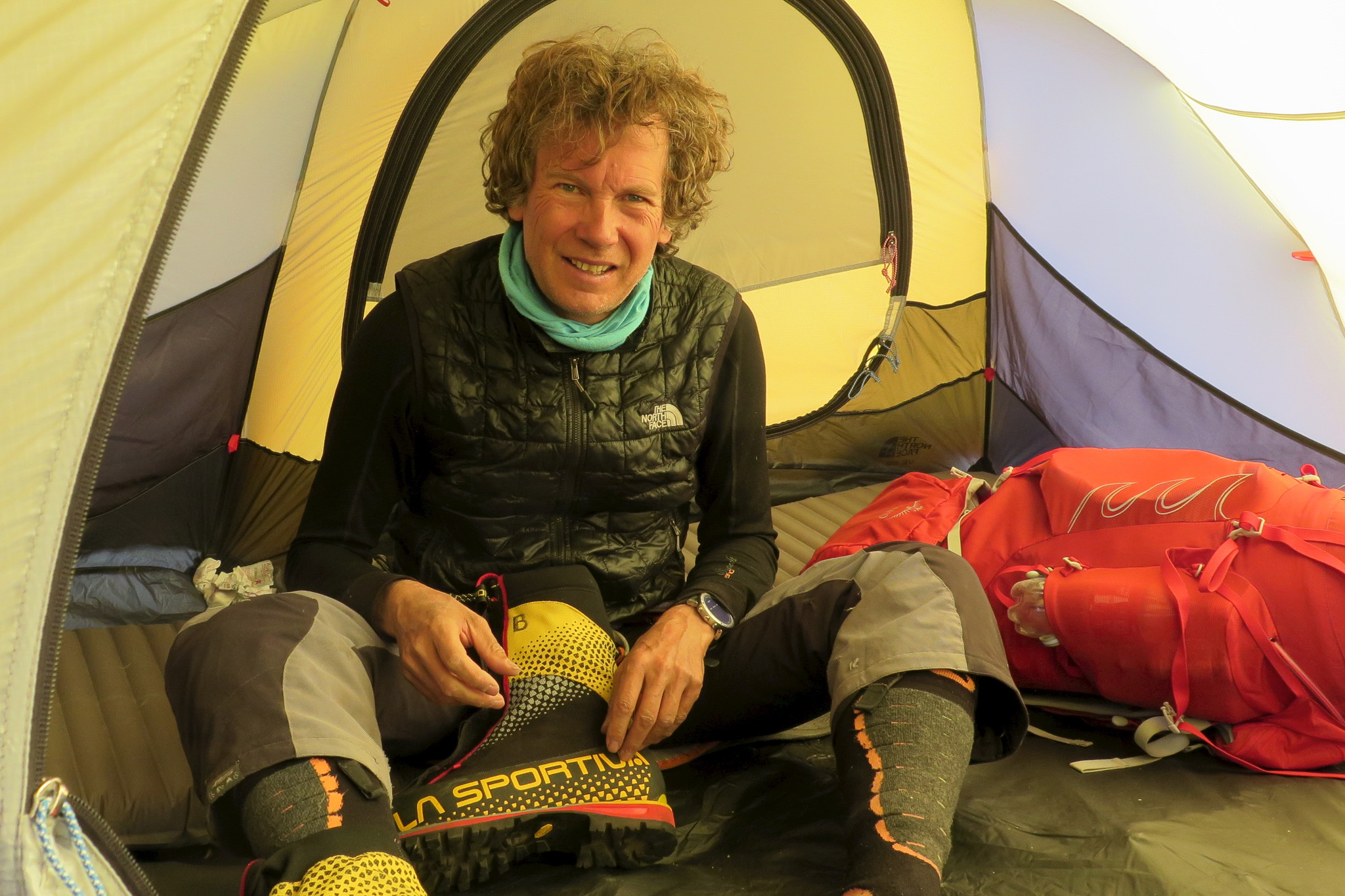
Camp 1 can accommodate 10 to 12 tents, set up between the rocky blocks. During peak season, when several teams are attempting the ascent simultaneously, the number of climbers requires tents to be packed in as tightly as possible.
© Bruno Serraz
Camp 1 – Camp 2 (6100 m) : passing the Yellow Tower
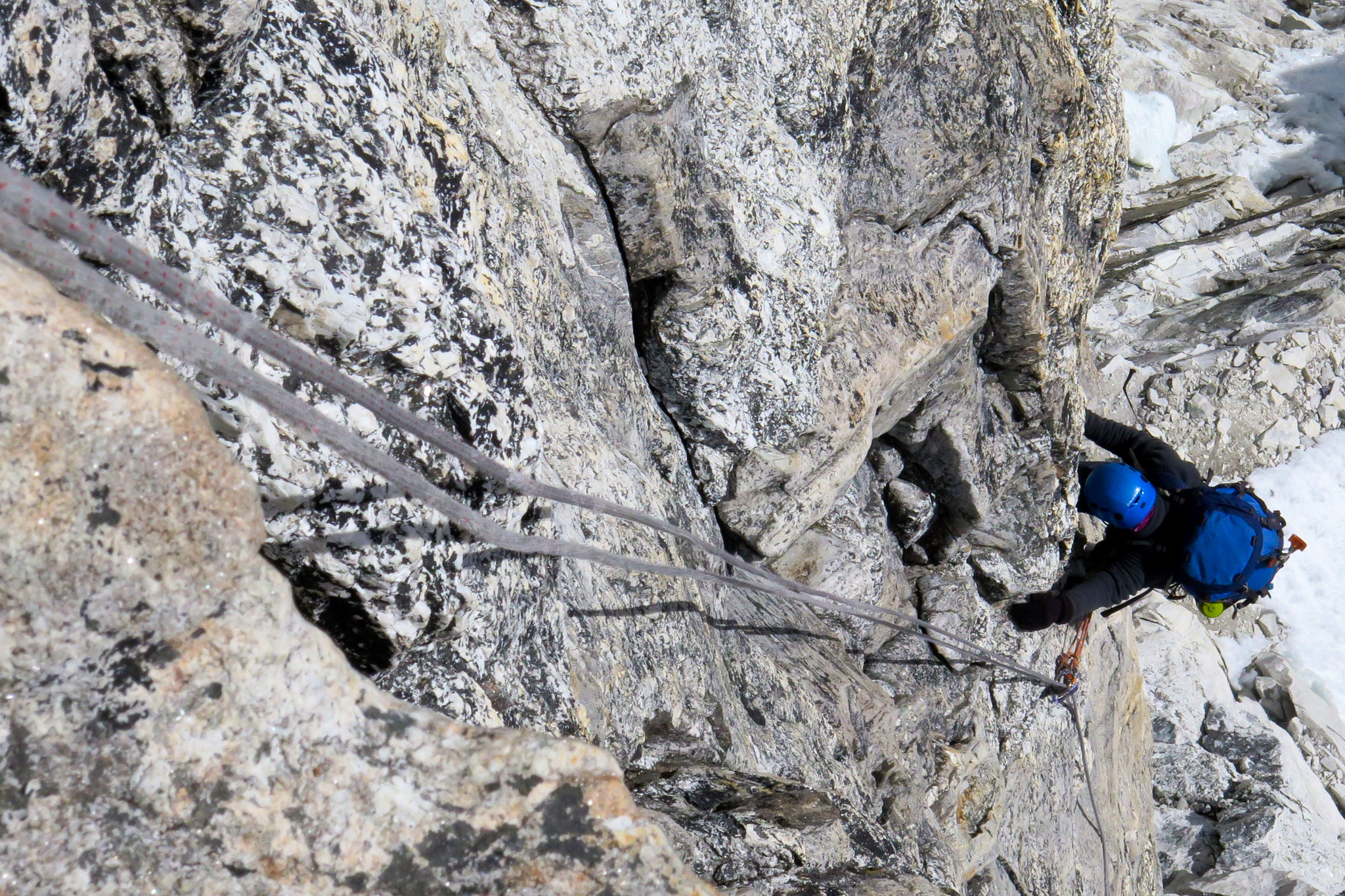
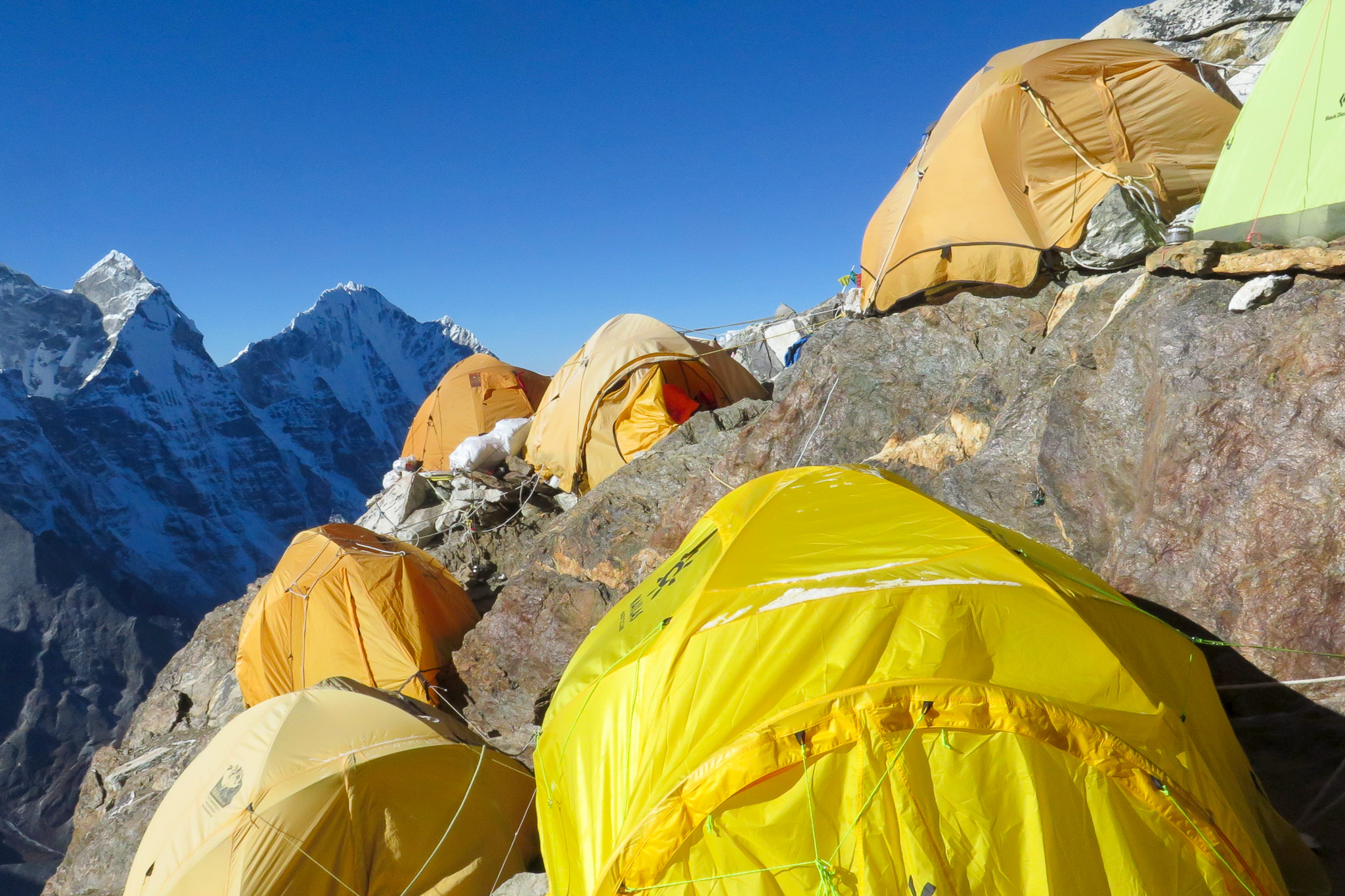
This section offers exceptional climbing over approximately 2 hours 30 minutes, with the highlight being the crossing of the Yellow Tower. To make the most of the experience, it is best to set off early to avoid the crowds. The first hour involves navigating granite blocks in a magnificent landscape. The climb to the top of the Yellow Tower involves an ascent at nearly 90 degrees for a few meters. Although this section is equipped with fixed ropes, it requires excellent physical fitness and a head for heights. The most difficult pitch, graded V+/VIa (if climbed on lead and without equipment), is sometimes equipped with a caving ladder! Once this pitch is cleared, the final climb to Camp 2 at 6100 meters is relatively straightforward. Camp 2, very cramped, is located at the top of the Yellow Tower.
© Bruno Serraz
Camp 2 – Camp 3 (6400 m) : Mushroom Ridge
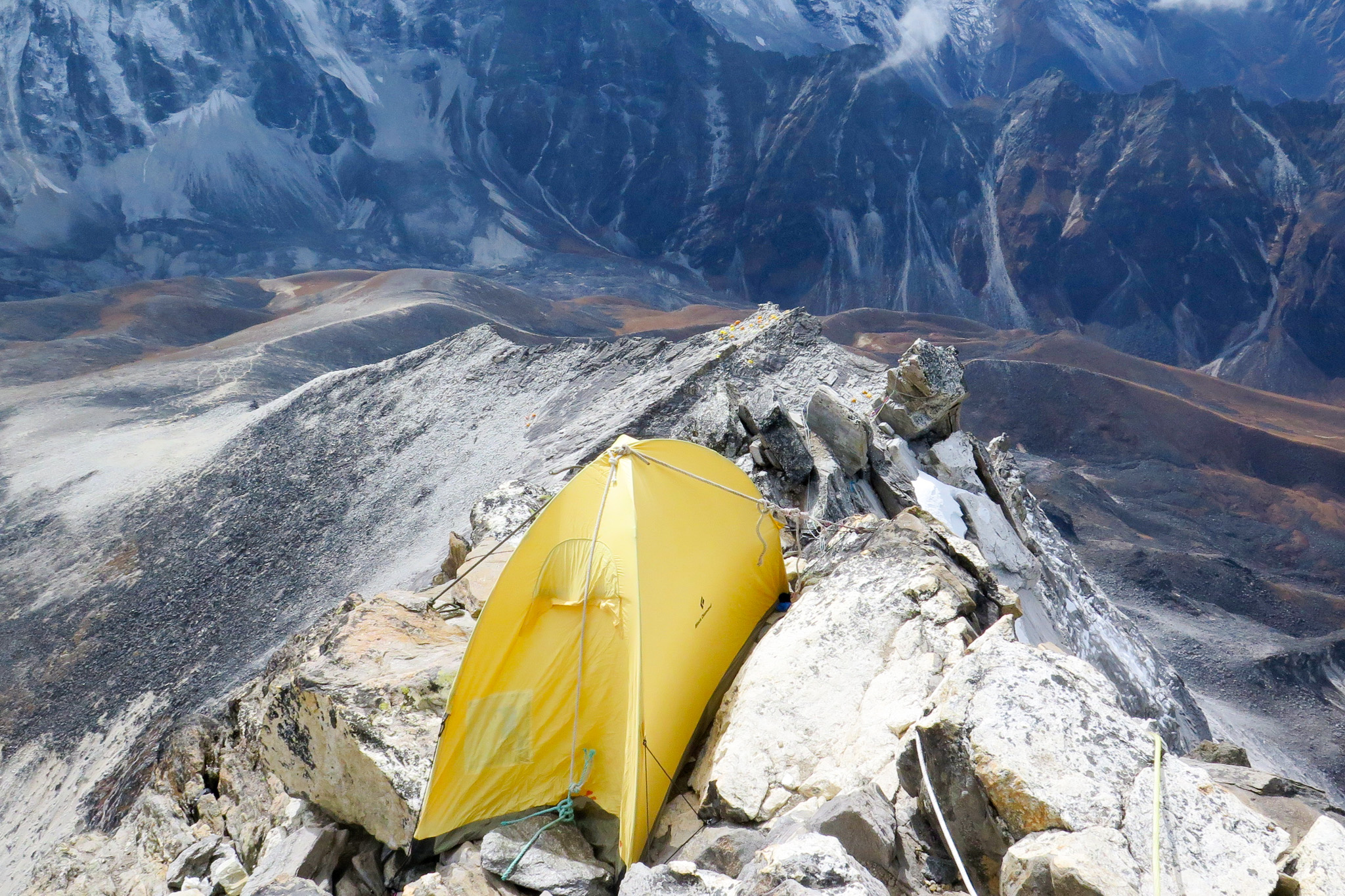
This is the most impressive section of the route. After a first very steep pitch and a committing traverse, the route joins the spectacular Mushroom Ridge, so named because of the formations created by snow cornices. Progress is made along this exposed ridge, with a drop of more than six hundred meters on each side. On this section, numerous fixed ropes, both old and recent, mark the route. It is crucial to attach your ascender firmly to the most recent rope, especially in the dark.
After crossing a final couloir, progress continues along the ridge to Camp 3, reached after five hours of climbing. Some teams choose not to stop there and continue directly towards the summit. The viability of Camp 3 depends heavily on snow and ice conditions, and it is generally established in spring rather than autumn, due to lack of space.
© Bruno Serraz
Camp 3 : summit of Ama Dablam (6812 m)
We begin by skirting to the right the imposing serac clearly visible from the bottom of the mountain. Steep snow slopes lead to the Ice Flutes of the final section, also equipped with fixed ropes. Progress is made on slopes inclined between 55 and 65 degrees. Setting off directly from Camp 2, allow more than 10 hours. Once at the summit, a vast plateau offers a breathtaking view of Everest, Makalu (8463 m) and Baruntse (7129 m) in clear weather.
Depending on the pace of ascent, the summit is reached in approximately four hours from Camp 3. Unlike other routes, no false summit disrupts the progression: reaching the summit truly marks the culmination of the ascent, an exceptional achievement.
Descent from the summit
The ascent itself represents only half of the journey. It is essential to descend as low as possible to spend the night, either at Camp 3 or preferably at Camp 2. The following day, the return to base camp is made. During the descent, vigilance remains essential, as the slightest handling error on the fixed ropes can prove fatal on the ridge, which is particularly exposed. To ensure safety, it is strongly recommended to train thoroughly before departure.
