
 Expeditions Unlimited blog
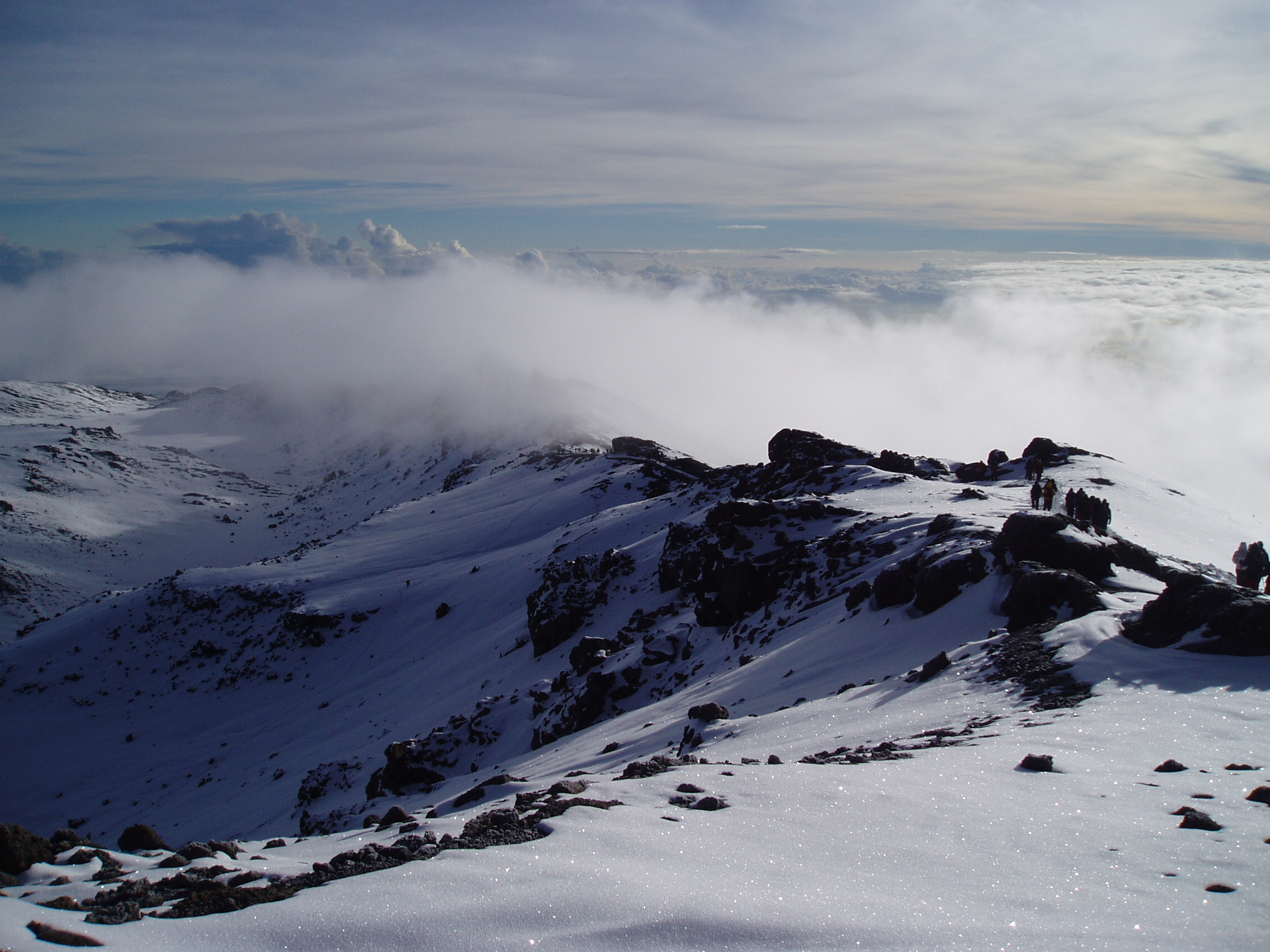
Located near the equator, Kilimanjaro does not experience the traditional summer and winter seasons. Instead, it alternates between a dry season and a wet season.
Humidity brings rain and clouds at lower altitudes, while higher up on the mountain it manifests as snow and ice. To maximise the chances of success on the Kilimanjaro trek, it is best to plan the ascent during the dry season.
To help you prepare your Kilimanjaro ascent in the best possible conditions, we provide detailed information on these particular climate patterns.
Seasons and climate on Kilimanjaro
© Jérôme Brisebourg
Located on the equator, Kilimanjaro sees an alternation between the dry season and the rainy season:
- main dry season, from July to October: this is the most stable period, but also the busiest for Kilimanjaro trekking;
- short dry season, from January to early March: somewhat more uncertain, but generally favourable due to lower crowds;
- main rainy season, from March to May: heavy rainfall, difficult conditions, but stunning light;
- second rainy season, from mid-October to mid-December: lighter rainfall, but rather unfavourable conditions.
However, climate change has made these seasons less predictable, with occasionally extreme weather conditions.Situé sur l'équateur, le Kilimandjaro voit une alternance entre la saison sèche et la saison des pluies :
Crowds on Kilimanjaro
© Jérôme Brisebourg
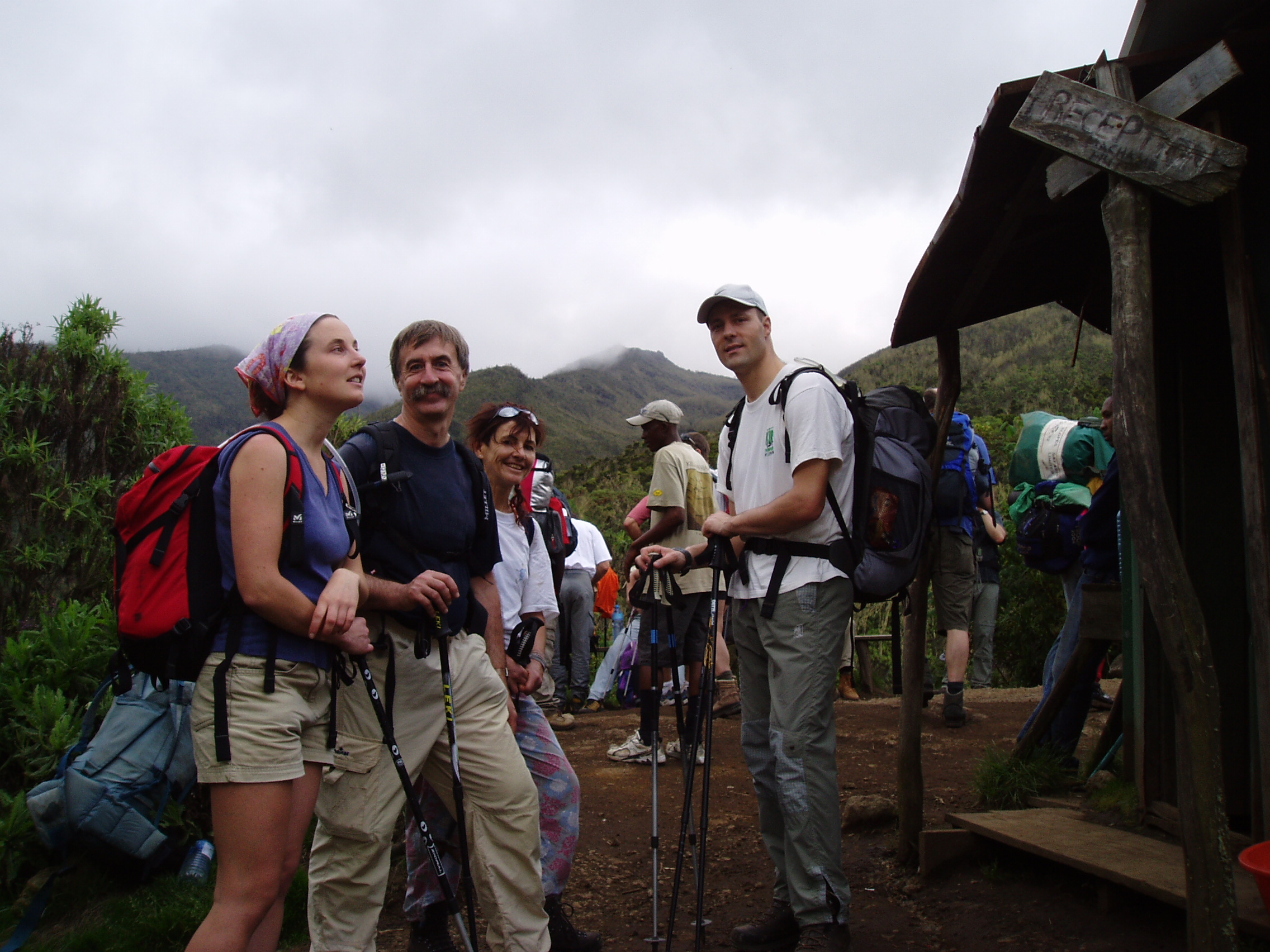
When trekking Kilimanjaro, it is important to note that the best periods for the ascent are logically also the busiest.
If you are looking for more solitude on the mountain, it is recommended to opt for a less frequented route, such as the Rongai on the north face, or better still, the Grand Traverse of Kilimanjaro, also via the north face.
The Marangu (east face) and Machame (south face) routes attract the greatest number of hikers. The campsites there are often very busy, although there is always enough space to pitch tents.
All campsites on the main Kilimanjaro trekking routes are equipped with concrete toilet blocks and have a ranger station where it is mandatory to register each day.
Clouds and visibility on Mount Kilimanjaro
© Jérôme Brisebourg
During the ascent
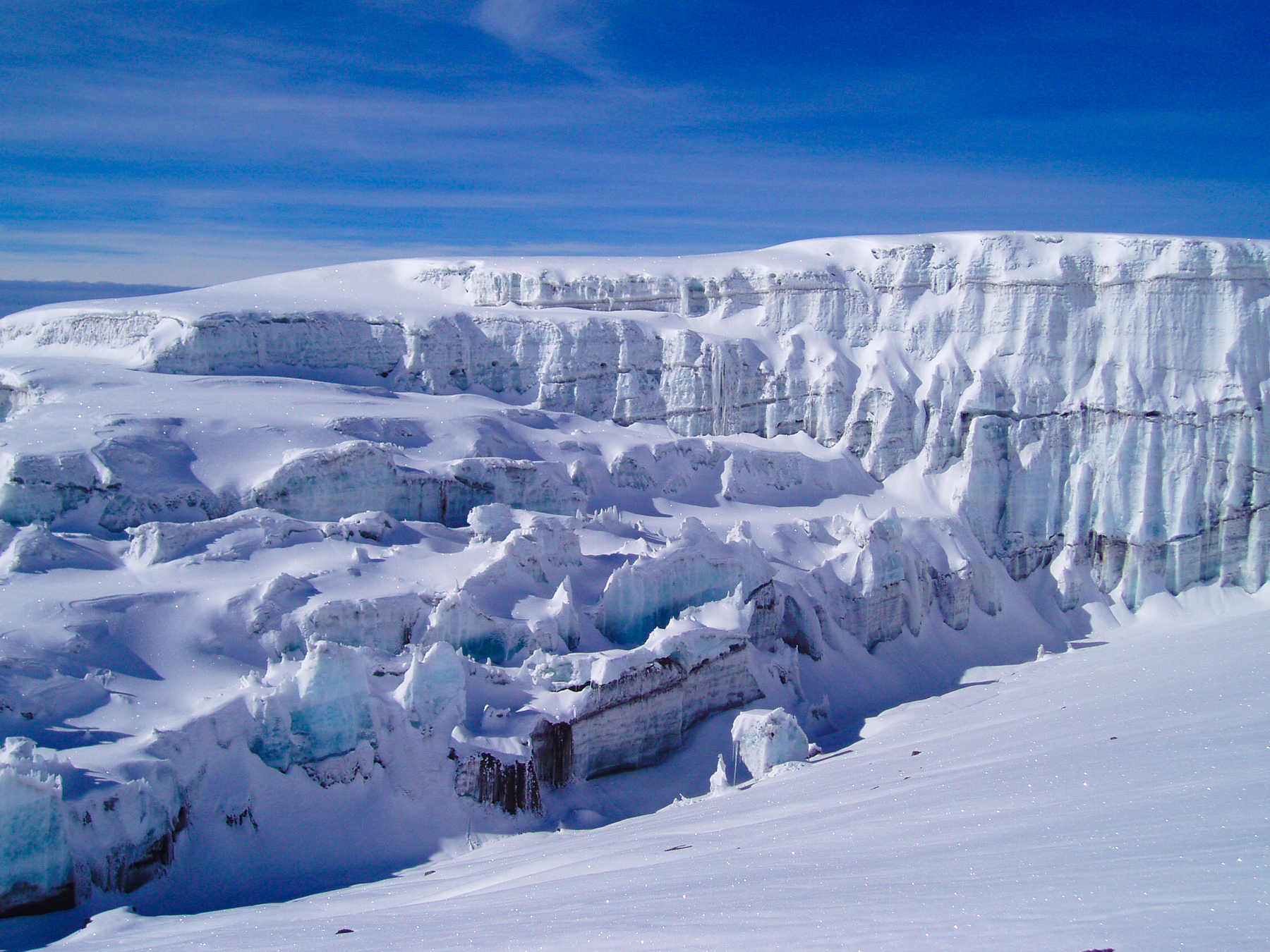
During the Kilimanjaro trek, an impressive phenomenon occurs every day: clouds gradually rise up the slopes to form a true sea of clouds around the summit. From the camps situated above the forest, this view is one of the most spectacular of the entire ascent.
The views of Mount Mawenzi's summit (Rongai route) are then breathtaking.
At sunset, this sea of clouds is often tinged with pink and red, while Kibo, Kilimanjaro's main volcanic summit, is magnificently lit by the last light of the day. One of the most striking views is that seen from Mawenzi Tarn camp on the Rongai route.
At night, the brilliant moonlight and Kilimanjaro's equatorial position offer a unique view of the constellations of both the northern and southern hemispheres. These sublime landscapes make the Kilimanjaro trek a truly magical and unforgettable experience.
Conditions at the summit
In recent years, over short periods, the summit of Kilimanjaro has experienced significant snowfall and freezing temperatures. The path can become covered in black ice. Above 4500 meters, conditions are comparable to those of a winter in high mountain terrain:
- extremely low temperatures;
- high altitude and low oxygen;
- slippery terrain and reduced visibility.
It is therefore essential to be well equipped for the Kilimanjaro trek:
- thermal clothing;
- crampons for shoes (so-called "forest" crampons are sufficient);
- equipment suited to winter conditions.
Finally, the final ascent to the summit generally begins at midnight, making the experience even more demanding both physically and mentally. It lasts more than 12 hours and is always the most gruelling stage in terms of elevation gain.
Meteorology and katabatic winds on Mount Kilimanjaro
© Jérome Brisebourg
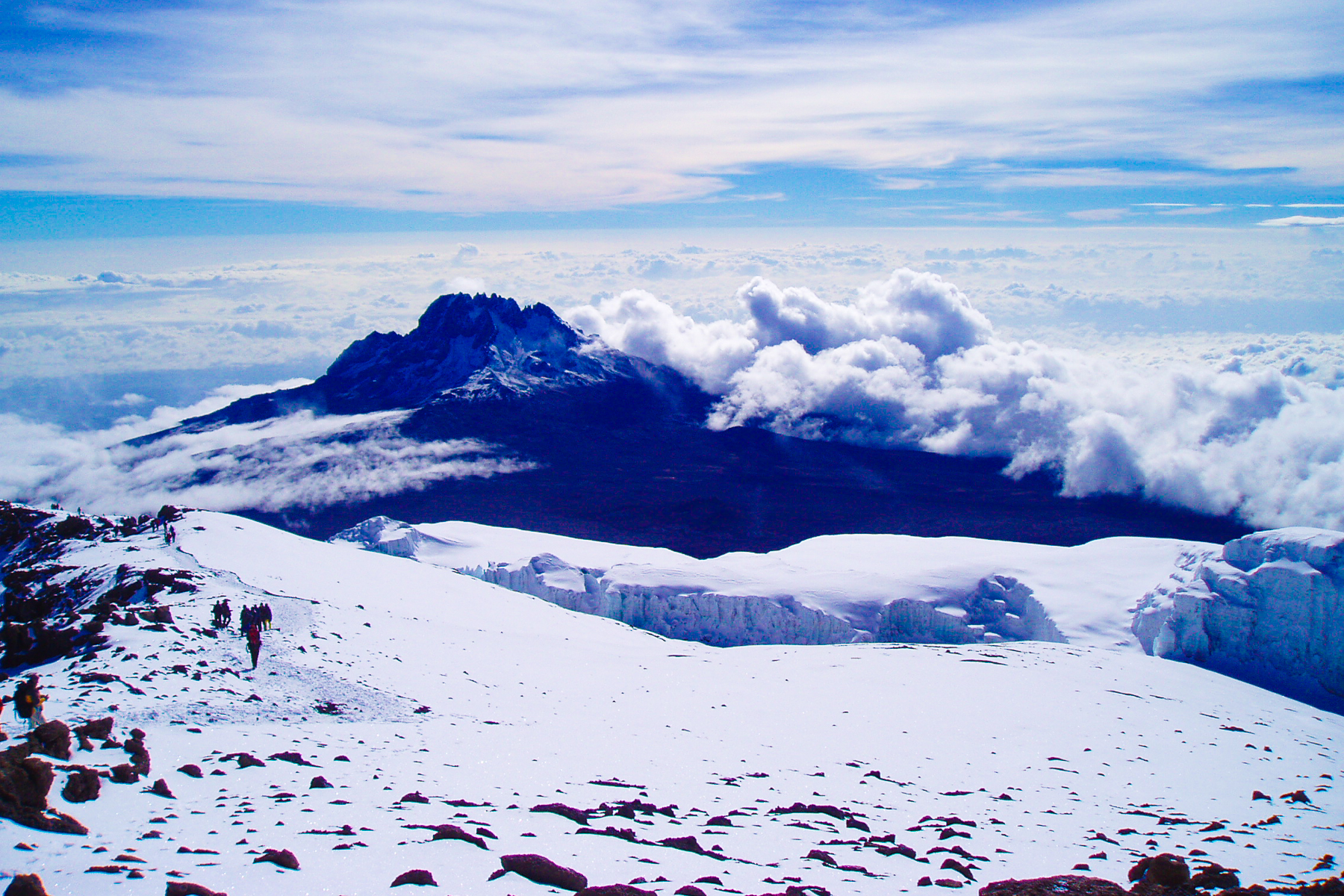
During the Kilimanjaro trek, hikers are confronted with an impressive meteorological phenomenon known as "katabatic winds".
These winds descend rapidly down the mountain's slopes, sometimes at speeds comparable to those of a hurricane. They act as a drainage system, carrying dense, cold air to lower altitudes under the effect of gravity. The air at the summit of Kilimanjaro cools over the plateaus and glaciers, which increases its density and causes it to flow downward.
These icy winds, born on the summit glaciers, propel cold air down the mountain's flanks, making certain sections of the Kilimanjaro trek particularly cold and exposed.
Due to their high humidity, these winds can create an intense sensation of cold, capable of chilling one literally to the bone. It is therefore essential to be well equipped with warm, wind-resistant clothing to face these extreme conditions.
How to prepare for bad weather on Kilimanjaro
© Myriam Roubinet
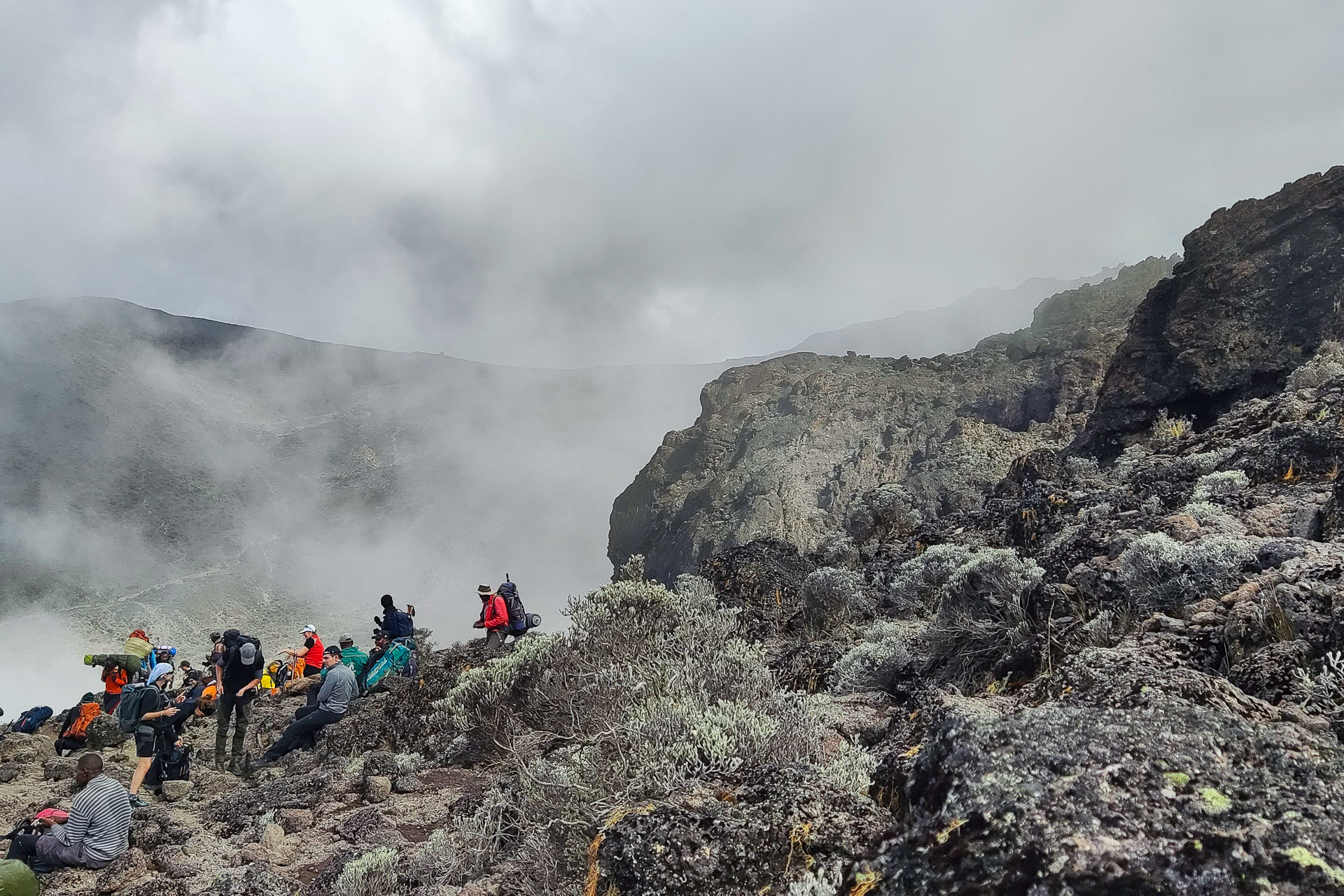
During the Kilimanjaro trek, weather conditions can be unpredictable. In bad weather, dense clouds surround the summit massif, accompanied by strong winds, intense cold and humidity throughout the ascent. It is essential to adopt a pragmatic approach and accept that, on such a long route, at least one day will be marked by difficult conditions. With a bit of luck, summit day will be clear and wind-free.
To cope with bad weather during the Kilimanjaro trek, adequate and well-prepared equipment is indispensable.
Here is an extract from the equipment list to bring for the Kilimanjaro ascent
These are the points you need to be particularly careful about, as with any high-altitude ascent:
- A first waterproof and windproof layer: (jacket and trousers) to protect against rain and wind. Opt for breathable Gore-Tex clothing, with a waterproof jacket and trousers fitted with ventilation panels allowing good air circulation during the ascent.
- A second insulating layer: a not-too-thick down jacket — you need to be able to wear it under the first layer and still be able to move freely. It will also serve to face freezing temperatures, particularly around the camps. This is the mid-layer that you can remove while walking.
- A third fleece layer: ideal when walking, as it retains body heat while allowing good breathability to prevent the build-up of perspiration, which could make you feel cold.
Trekking and climbing Kilimanjaro is a high-altitude adventure. Being well equipped against the elements can make all the difference between a comfortable ascent and a gruelling experience.Ce sont les points sur lesquels vous devez être particulièrement vigilant, comme pour toute ascension en altitude :
Trekking and climbing Kilimanjaro during the rainy season
© Myriam Roubinet
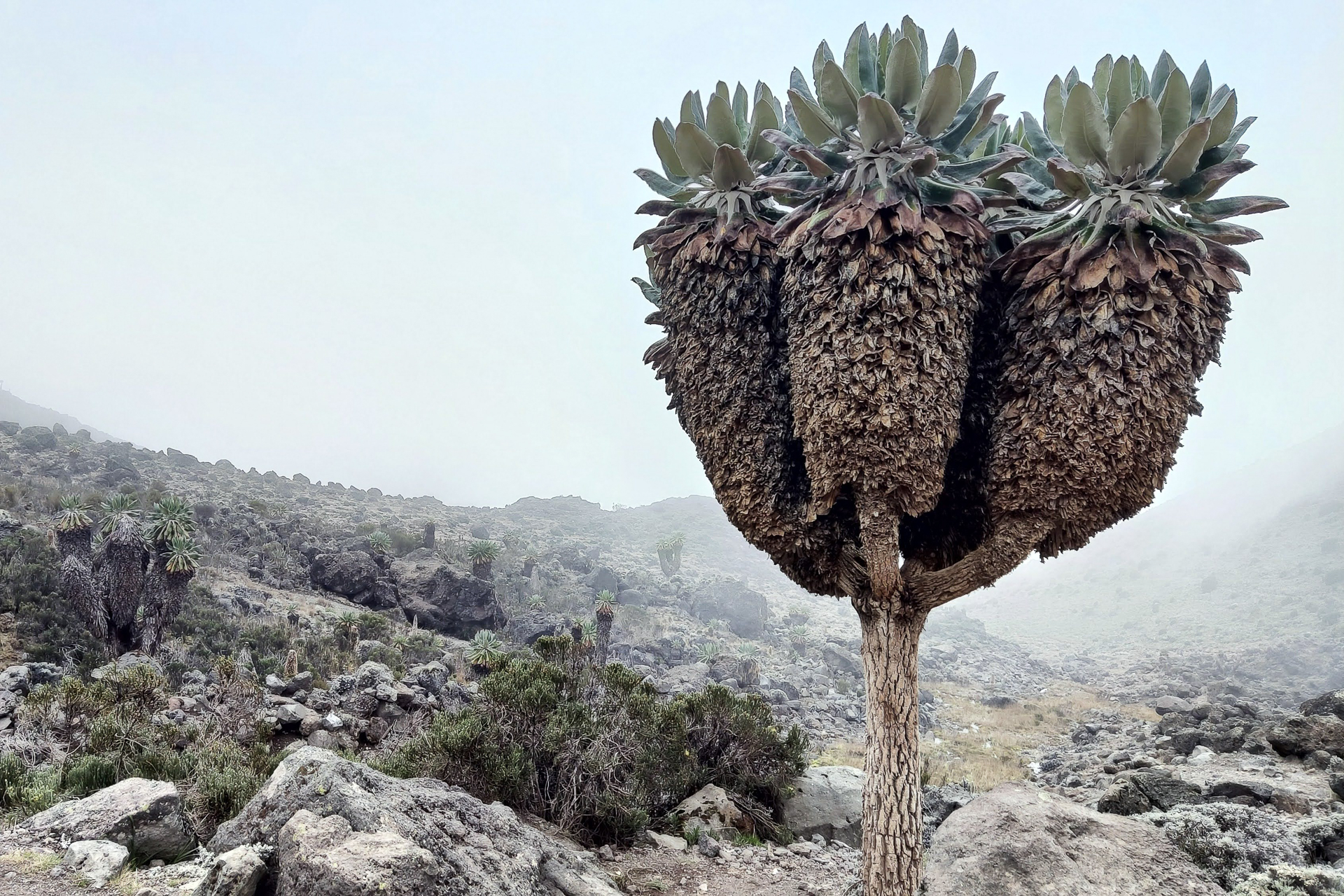
Kilimanjaro trekking is heavily influenced by the trade winds coming from the Indian Ocean. Between March and May, these winds carry moisture-laden air, making this period the wettest season on the mountain. Lower crowds and stunning light characterise an ascent during the rainy season.
Humidity shapes the Kilimanjaro trekking experience, influencing both the climate and visibility. The spectacular panoramas from the summit can be partially obscured by clouds and mist. This is why rain protection equipment is essential.
In mid-October, the formation of clouds around the base and summit of Kilimanjaro is characteristic. These cloud masses, typical of the rainy season, can sometimes block the view of the valley below. However, walking through the clouds during the Kilimanjaro trek offers a unique and surreal experience, making the adventure perhaps even more memorable.