
 Expeditions Unlimited blog
Reaching a summit above 8000 metres is a dream for many mountaineers. It is a unique human and physical adventure, an immersion at high altitude where every step counts, where effort blends with wonder. But among the fourteen "8000ers" on the planet, some are more accessible than others for a first expedition.
Beyond altitude, it is a matter of complex logistics and rigorous physical and mental preparation to face common challenges: acute mountain sickness (AMS), extreme weather conditions, intense cold – which can reach or exceed −30° to −40° – managing load-carrying and accumulated fatigue.
At Expeditions Unlimited, every year we guide mountaineers towards their first summit above 8000 metres. If you are thinking of taking the plunge, three options stand out: Manaslu (8163 m) in Nepal, Cho Oyu (8201 m) and Shishapangma (8027 m) in Tibet.
Here is our detailed guide to help you choose the summit that suits you best. For our part, we provide professional supervision, experienced guides, flawless logistics and expert weather and medical support.
Three giants, three characters
Manaslu – 8163 metres (Nepal)
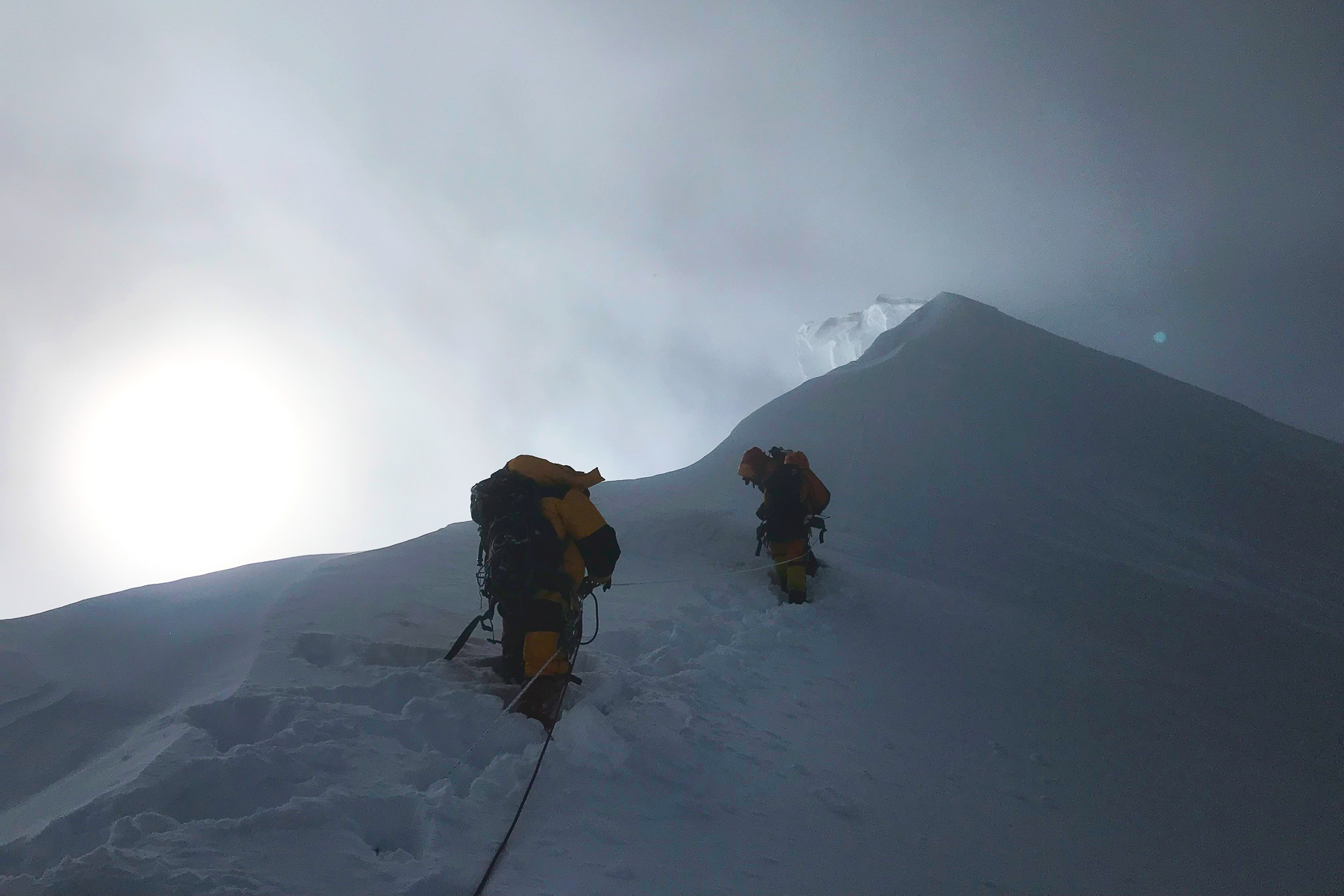
Located in the Gorkha region of central Nepal, Manaslu is the eighth-highest summit in the world. The approach takes eight days along a beautiful trekking route that passes through many traditional villages. The classic route follows the north-east shoulder, with 4 high-altitude camps.
Ascent: from base camp (4850 m) to Camp 4 (7400 m)
From base camp, we set off towards Camp 1 at 5900 metres. This first stage crosses glacial moraines and crevasse zones, requiring a good familiarity with glacier travel. Steady but avalanche-exposed slopes lead to Camp 2 at 6400 metres, set up on a glacial plateau. The trickiest sections are equipped with fixed ropes. The slopes steepen to lead to Camp 3 at 6800 metres, which offers breathtaking views. One more effort and we reach Camp 4 at 7400 metres. This is the final assault camp, from which mountaineers launch their summit attempt.
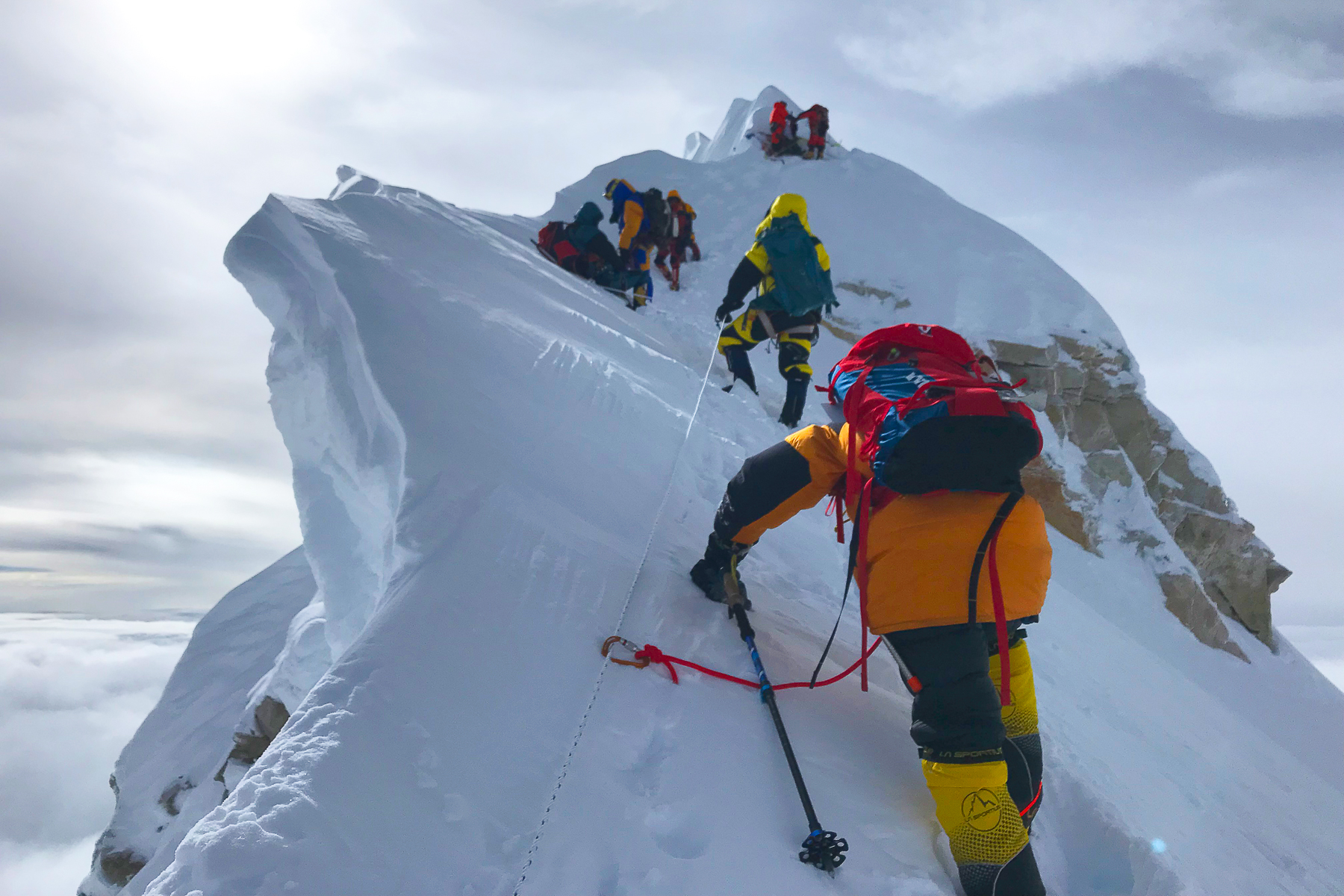
Summit push : it involves a long climb up snow and ice slopes. The summit section is characterised by an exposed ridge leading to the fore-summit (8156 m), requiring great caution and good crampon technique. The "true" summit of Manaslu is separated from the fore-summit, where many mountaineers stop, by a thin corniced ridge, beyond which one must descend to a small col at the foot of the summit. A further fifteen metres or so to climb lead to the peak of Manaslu at 8163 metres.
Highlights: Nepalese atmosphere, magnificent approach trek, good gradual acclimatisation. Potential rescues well organised thanks to the helicopters available in Nepal.
Manaslu is considered by many to be an excellent gateway into the world of the 8000ers.
Caution: the summit is tricky. The final ridge is long and corniced, and many mountaineers stop at the "false summit". Recurring avalanches in certain areas.
If you would like to learn more about the history of the ascent of Manaslu, be sure to read on our blog The ascent of Manaslu: an incredible epic.
Cho Oyu – 8201 metres (Tibet)
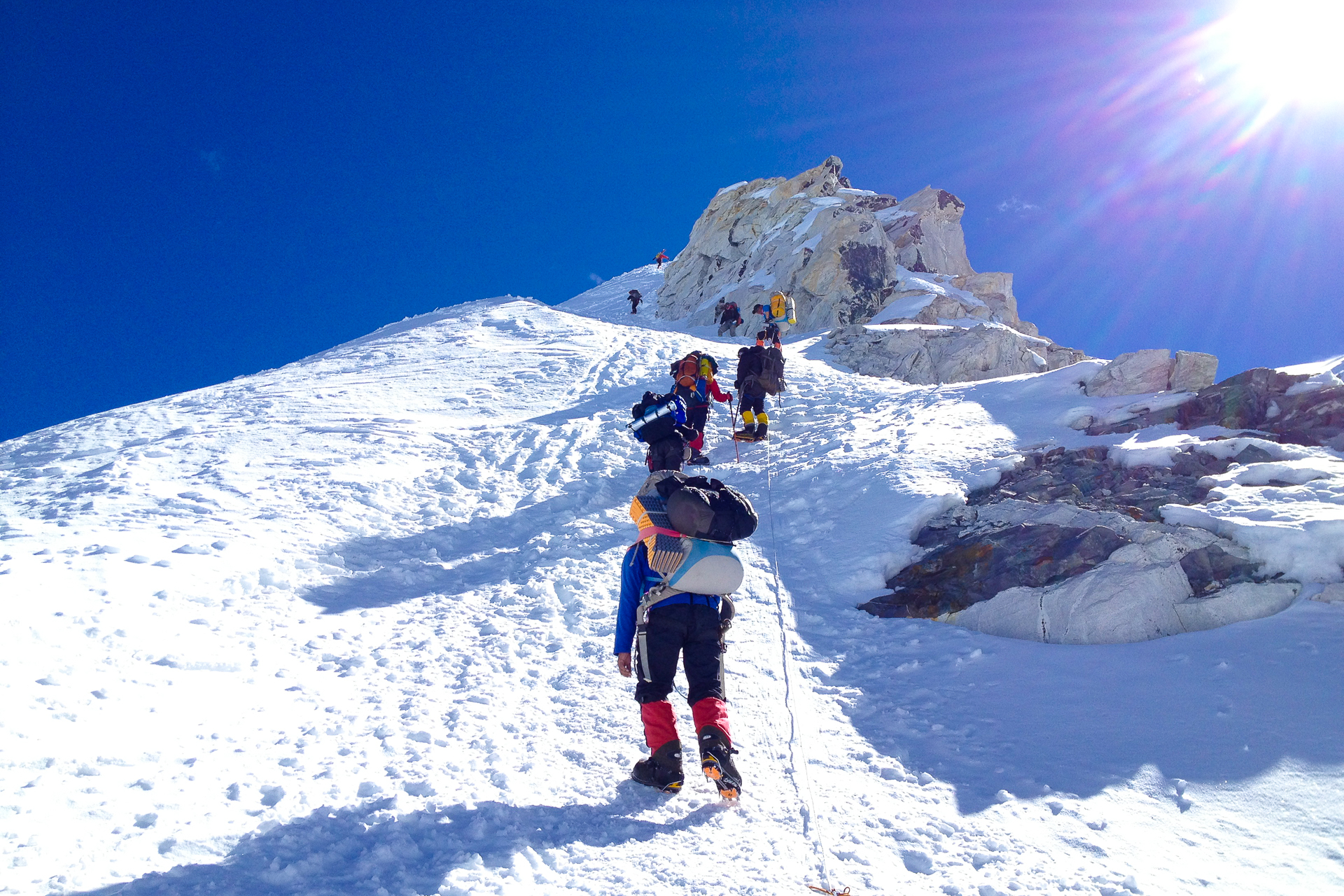
The sixth-highest summit in the world, Cho Oyu, nicknamed "the turquoise goddess", is considered the most accessible of the 8000ers. Located on the Sino-Nepalese border, it is renowned for its relatively moderate slopes and its technically undemanding normal route. It is climbed via its north-west face. Base camp is reached directly by vehicle.
Ascent: from base camp (4900 m) to Camp 3 (7600 m)
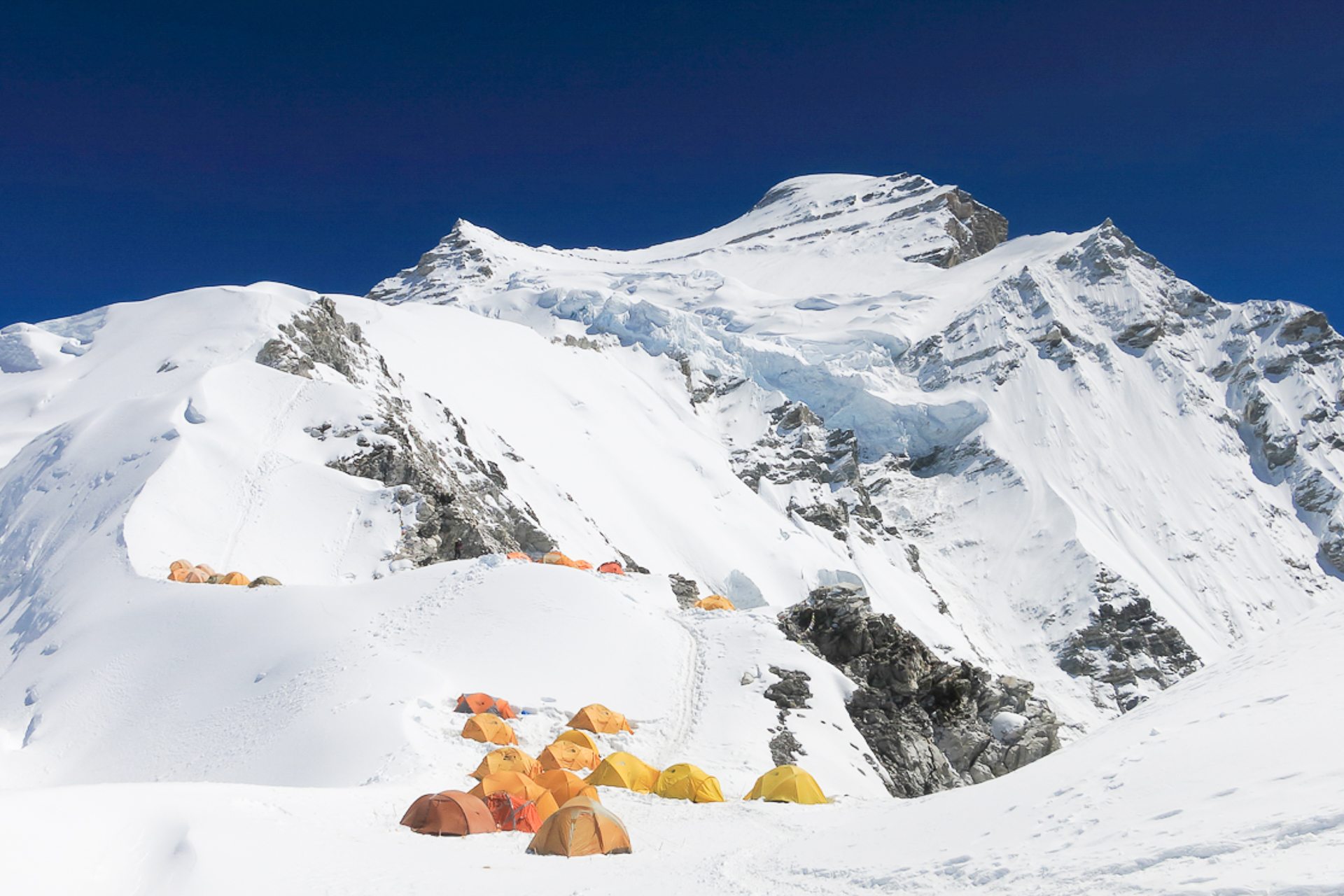
From base camp, an easy climb to advanced base camp at 5600 metres. It is from ABC that the ascent really begins. The climb up the snow slopes leading to Camp 1 (6400 m) presents no difficulty. Next comes the crossing of the Ice Cliff (a serac barrier) between Camp 1 and Camp 2 (7200 m), the most technical section, equipped with fixed ropes. Steady progress between Camp 2 and Camp 3 (7600 m), located at the foot of the Yellow Band, a limestone step that blocks access to the summit plateau.
Summit Push : from Camp 3, you must climb the rocks of the Yellow Band (fixed ropes over 150 metres) to reach the broad snow plateau, which is little exposed to avalanche risk.
Highlights: very high success rate, steady route, limited objective risk. Ideal as a first 8000er.
Caution: the administrative conditions for accessing Tibet can be unpredictable. The altitude makes itself felt right from the start of advanced base camp (5600 m). The absence of helicopters in Tibet means having to travel by road to the Nepalese border before being able to take a helicopter flight to Kathmandu, which makes any rapid rescue almost impossible.
To learn all about the first ascent of Cho Oyu, be sure to read our account Cho Oyu: the clandestine conquest.
Shishapangma – 8027 metres (Tibet)
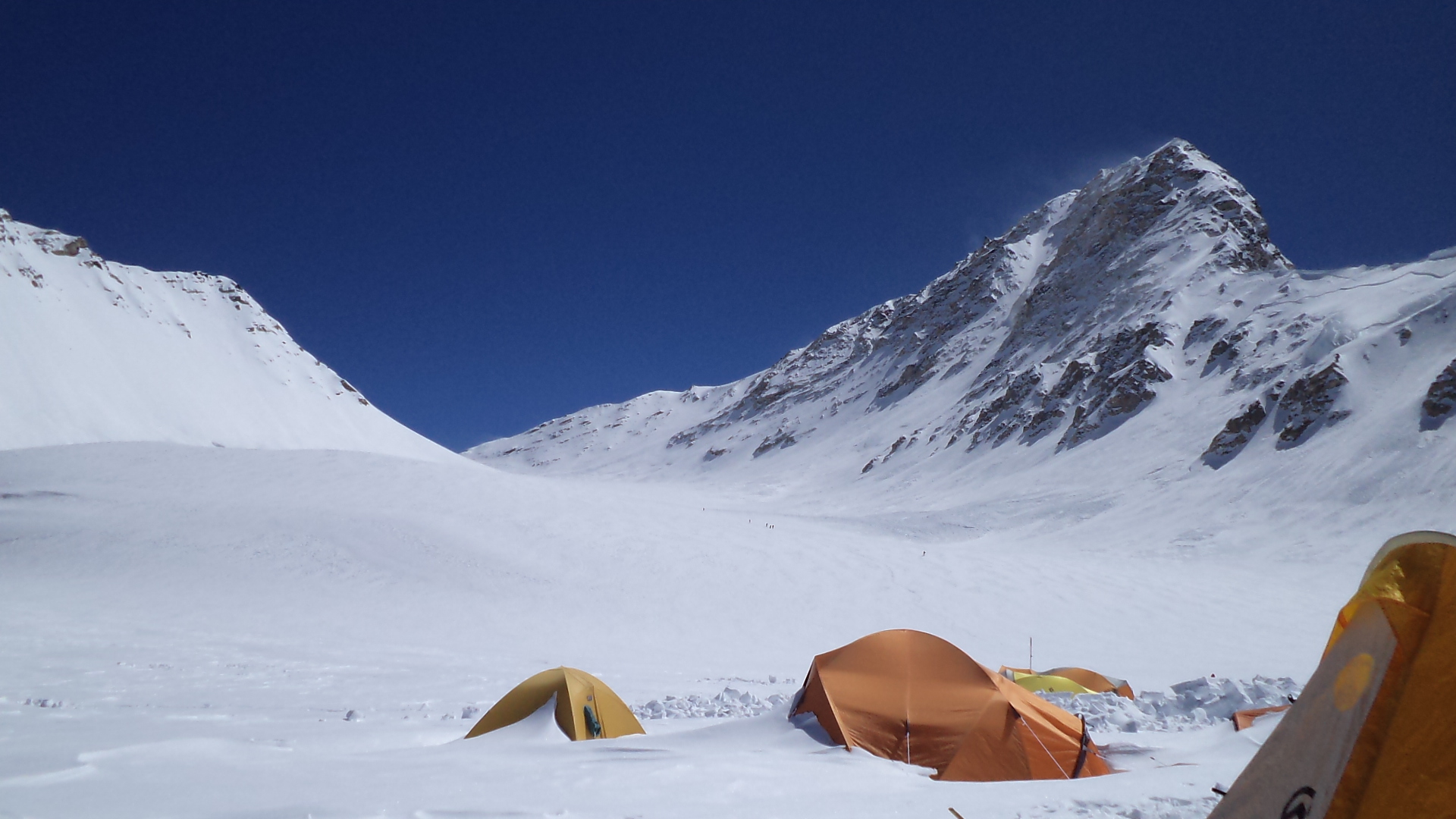
The fourteenth and last of the summits above eight thousand metres, it is the only one located entirely within Tibetan territory. Less frequented, it offers a more intimate experience. The classic route follows the north shoulder. Historically less visited than Cho Oyu, its popularity has grown in recent years, notably because of its lower altitude, which can make it psychologically more accessible. The approach to Shishapangma is similar to that of Cho Oyu, with access by 4×4 vehicle to base camp (BC) located at 4900 metres above sea level. The track continues to advanced base camp, which we follow on foot with a caravan of yaks.
Ascent: from advanced base camp (ABC – 5550 m) to Camp 3 (7400 m)
From ABC, the normal route on the north face runs mainly over glacier and snow slopes. Access to Camp 1 (6300 m) is guarded by crevasse zones, requiring cautious progress and the installation of bridges or ladders. Steady slopes lead to Camp 2 at 6900 metres, a camp well protected from avalanche risk. A further 500 metres must be climbed to reach Camp 3, at 7400 metres, from which the final assault begins.
Summit Push : the main distinctive feature of Shishapangma lies in its two summits: the central summit (8008 m) and the main summit (8027 m), separated by a long ridge. The normal route of commercial expeditions generally leads to the central summit. Reaching the main summit requires a long traverse on the north-west face across slopes that can prove unstable. The central summit is then avoided. For safety reasons, many expeditions consider reaching the central summit to be a success in itself.
Highlights: isolation, beauty of the setting, summit often in good conditions.
Caution: an important distinction between the central summit (where many stop) and the true main summit, which is more technical and exposed. The absence of helicopters in Tibet means having to travel by road to the Nepalese border before being able to take a helicopter flight to Kathmandu, which makes any rapid rescue almost impossible.
Claude a répondu : Interested in learning all about the first ascent of Shishapangma?
Interested in learning all about the first ascent of Shishapangma? Be sure to read Shishapangma, the last 8,000er: the stolen victory.
Altitude, access and acclimatisation
|
Summit |
Altitude |
Access |
Acclimatisation |
|
Manaslu |
8163 m |
Long but gradual approach trek from Chauli Kharka. Base camp 4850 m. |
Good step-by-step acclimatisation. |
|
Cho Oyu |
8201 m |
Direct access to base camp at 4900 m by vehicle. |
It is preferable to be able to cope with rapid acclimatisation. |
|
Shishapangma |
8027 m |
Direct access to base camp at 4900 m. |
It is preferable to be able to cope with rapid acclimatisation. |
Note: contrary to popular belief, the base camps of Cho Oyu and Shishapangma are not located in the same place. They lie in two different valleys of Tibet, about 90 kilometres apart.
Technical difficulties and objective risks of the Manaslu, Cho Oyu and Shishapangma ascents
|
Summit |
Technical difficulty |
Natural risks |
Distinctive features |
|
Manaslu |
Moderate to sustained |
Avalanches, crevasses. |
False summit. Tricky final cornice. |
|
Cho Oyu |
Low to moderate |
Cold, altitude, frequent storms. |
The "safest" of the 8000ers. |
|
Shishapangma |
Moderate |
Exposed traverse on the north-west face to reach the true summit, frequent storms. |
Main summit rarely reached. |
Summit success statistics:
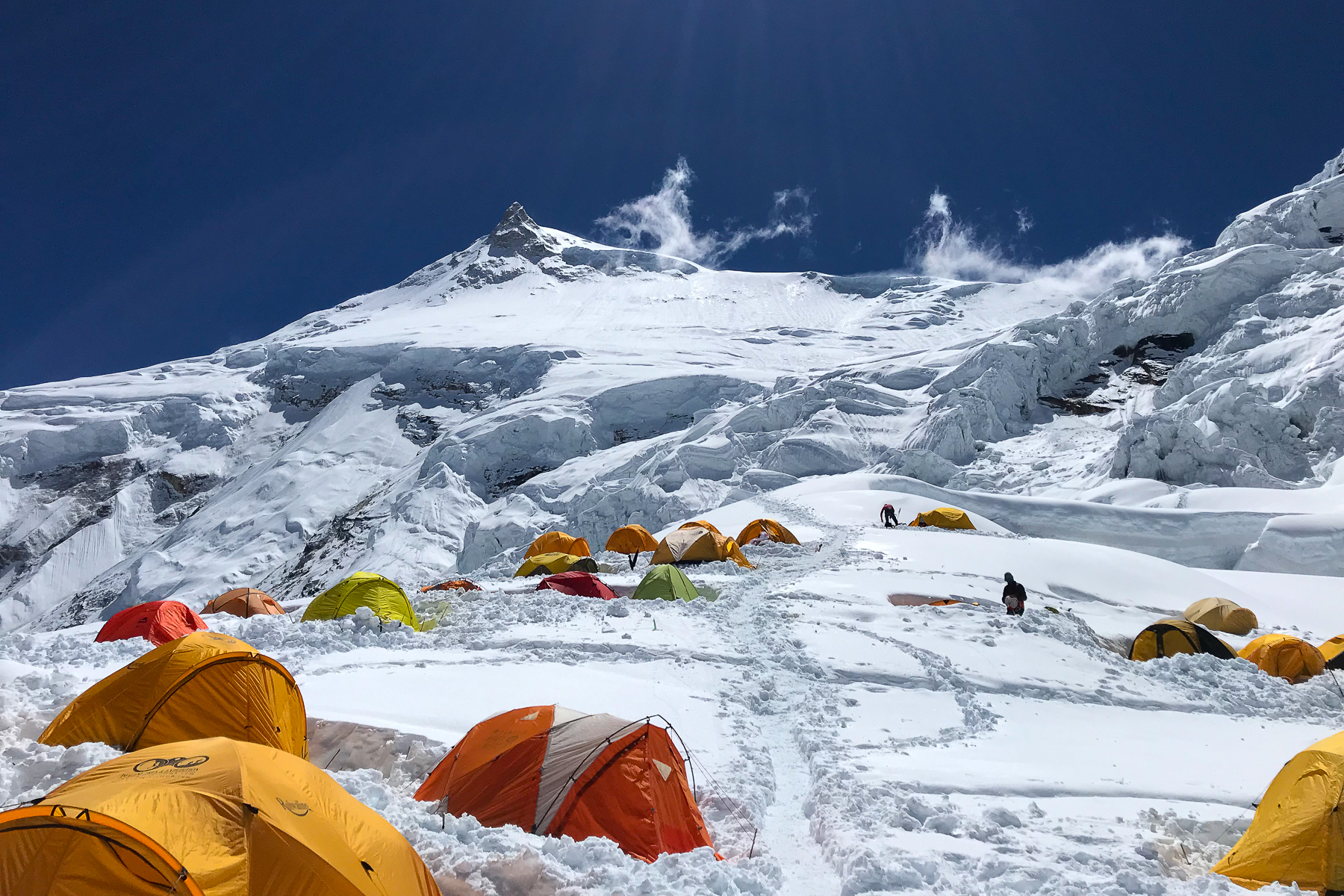
- Manaslu : the success rate is generally estimated at between 60% and 70%. Some sources even cite up to 75-80% in very good conditions (autumn season). It is important to note the controversy surrounding the "true summit" versus the fore-summit for some past expeditions, but for current commercial expeditions, the objective is the main summit. Manaslu is considered one of the most accessible 8000ers.
- Cho Oyu : Often cited as the technically "easiest" 8000er, its success rate is also high, often between 60% and 70%, or even more for some well-organised expeditions. There have been teams with a 100% success rate in ideal conditions.
- Shishapangma : Its success rate is described as "relatively high" compared with other, more technical 8000ers. It is difficult to find a precise overall percentage, but reports from recent expeditions show high success rates, sometimes 100% for commercial teams during good weather windows. The difficulty often lies in reaching the "true" main summit as opposed to the central summit, which can influence the perceived statistics. One can estimate a range similar to that of the other two, namely around 60-70% for successful ascents to the central summit. It is difficult for us to verify how many expeditions reach the "true" summit, probably very few.
Budget for the ascent of Manaslu, Cho Oyu and Shishapangma
Below is a summary of the budget for an expedition to:
- Manaslu : €25,000 / 45 days
- Cho Oyu : €39,000 / 45 days
- Shishapangma : €40,500 / 45 days
To this you need to add flights, in the region of €1,500, summit bonuses, in the region of €1,500, some miscellaneous expenses (trek tips and others, €500) and equipment, to be purchased or rented from us.
Cho Oyu is the most expensive but also the most accessible in terms of difficulty; Shishapangma is rarer, with the limitation of reaching "only" the central summit; Manaslu is more affordable economically but with more pronounced objective risks, hence the need to choose a reputable agency.
Which summit should you choose ?
You have solid alpine experience but no 8000er to your name yet?
If you favour cultural immersion, a longer approach trek and a warm atmosphere: Manaslu is probably the best choice. Its accessibility and high success rate make it an excellent option for a first experience.
Looking for a first guided expedition with a very favourable success rate?
If you are after "technical ease", relative for an 8000er, quick access to advanced base camp and logistical efficiency: Cho Oyu, the "turquoise goddess", awaits you with open arms. Ideal for those who want to focus above all on the altitude.
Seeking solitude, an intimate summit, off the beaten track?
If you want the experience of the "smallest" of the 8000ers, a little less frequented (than Manaslu) with varied challenges (crevasses, and the option of the main summit ridge): Shishapangma will offer you a complete adventure. Be prepared for the constraints of accessing Tibet and the distinction between its two summits.
Beyond these comparisons, the key factors to consider are:
- Your previous experience: Have you already climbed above 6000 or 7000 metres?
- Your physical condition: Are you ready for intensive training and prolonged endurance?
- Your tolerance to cold and discomfort: operating at 8000 metres takes place in an extreme environment.
- Your budget and logistical preferences: prices vary, and the approach to Tibet is more complex than that to Nepal.
Choosing your first 8000er isn't just a matter of numbers
It is also a matter of dreams, of climbing style, of pace, of budget, of personal ethics. Whether you are drawn to one or another of these three summits, we are here to advise you.
Expeditions Unlimited means field expertise, experienced supervision, reliable partners, and one commitment: to guide you all the way to the summit.
Need to discuss it?
Contact our team today to build your first 8000-metre expedition together.
« Every summit is a world. The first 8000er, an unforgettable journey. »