
 Expeditions Unlimited blog
For many adventurers, there are two great ultimate horizons: the highest summits in the world and the frozen immensities of the polar regions. On one side, Everest, Manaslu, Makalu or Pic Lenin. On the other, the crossing of Greenland, Antarctica, the North or South Pole, or long autonomous expeditions on the Arctic ice. At first glance, these worlds seem opposed. The mountain rises towards the sky while the polar regions stretch to infinity. Yet those who have frequented both worlds know that they share the same essence: commitment, autonomy and confrontation with some of the most demanding environments on the planet.
So, are you more of a polar expedition or high altitude person?
High altitude: the vertical challenge
© Valentin Rakovsky
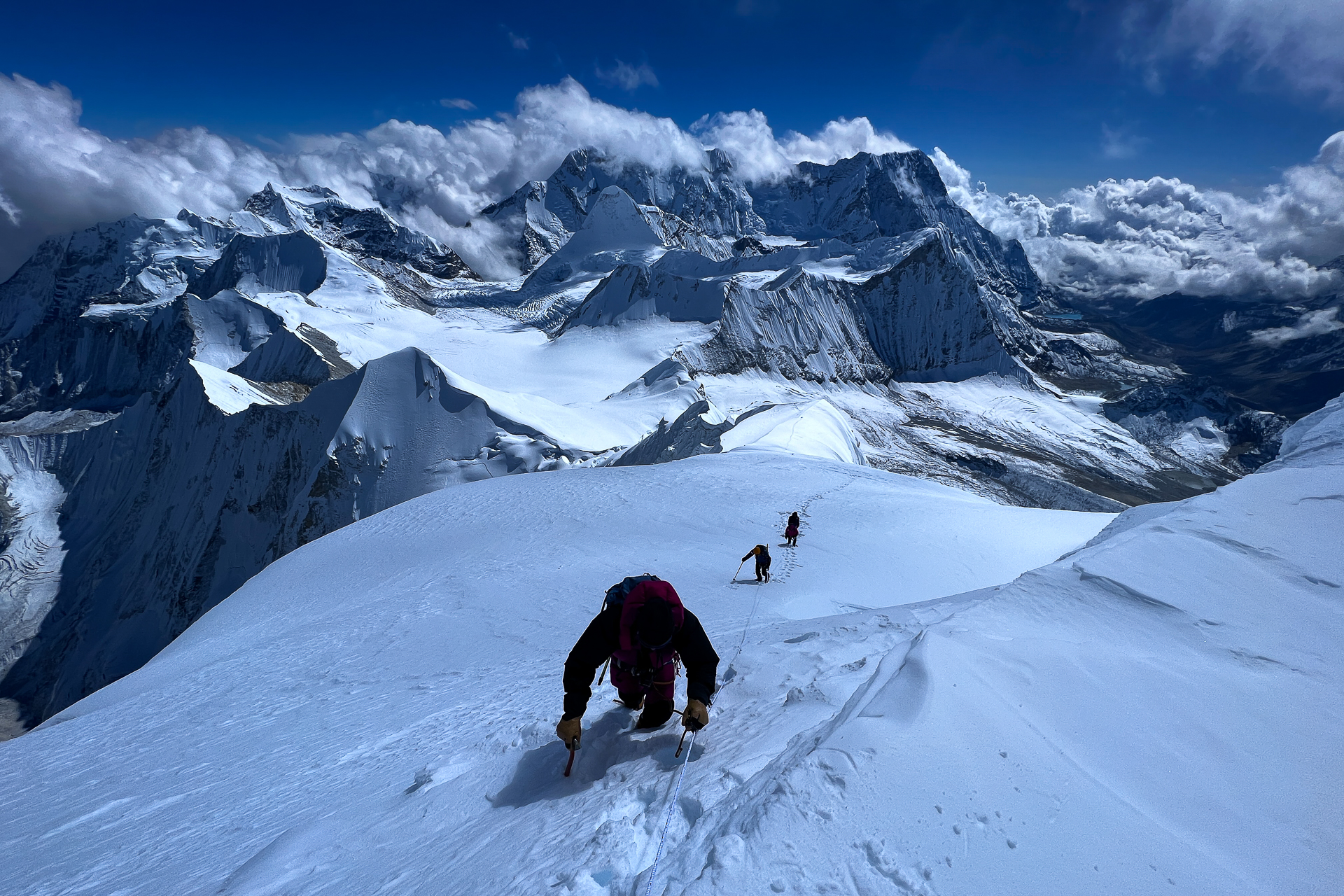
An expedition to 7000 or 8000 meters is above all an adventure of altitude.
Above 7000 meters, every movement becomes slower, every effort more costly. The body operates in an environment where oxygen becomes severely scarce and where acclimatisation becomes an essential component of success.
The ascent of a summit such as Baruntse, Pic Lenin, Manaslu or Everest is part of a gradual process. You go up, come back down, rest. Acclimatisation rotations allow the body to adapt progressively to the altitude.
Life organises itself around base camp, the true nerve centre of the expedition. Even when operating in the high-altitude camps, it is generally possible to return to base camp to recover, wait for a weather window or, perhaps, resolve a physical problem. At very high altitude nowadays, there is little load carrying thanks to our logistics teams, with camps pre-installed. You can focus on the effort.
This gradual progression is one of the fundamental characteristics of Himalayan and Central Asian expeditions. The landscapes are sublime and surreal as we progress. Here, no threatening wildlife.
But make no mistake: at very high altitude, dangers are omnipresent. The cold, the wind, crevasses, avalanches and above all the physiological effects of oxygen deprivation demand rigorous physical preparation and solid experience.
Polar expeditions: the horizontal adventure
© Dixie Dansercoer
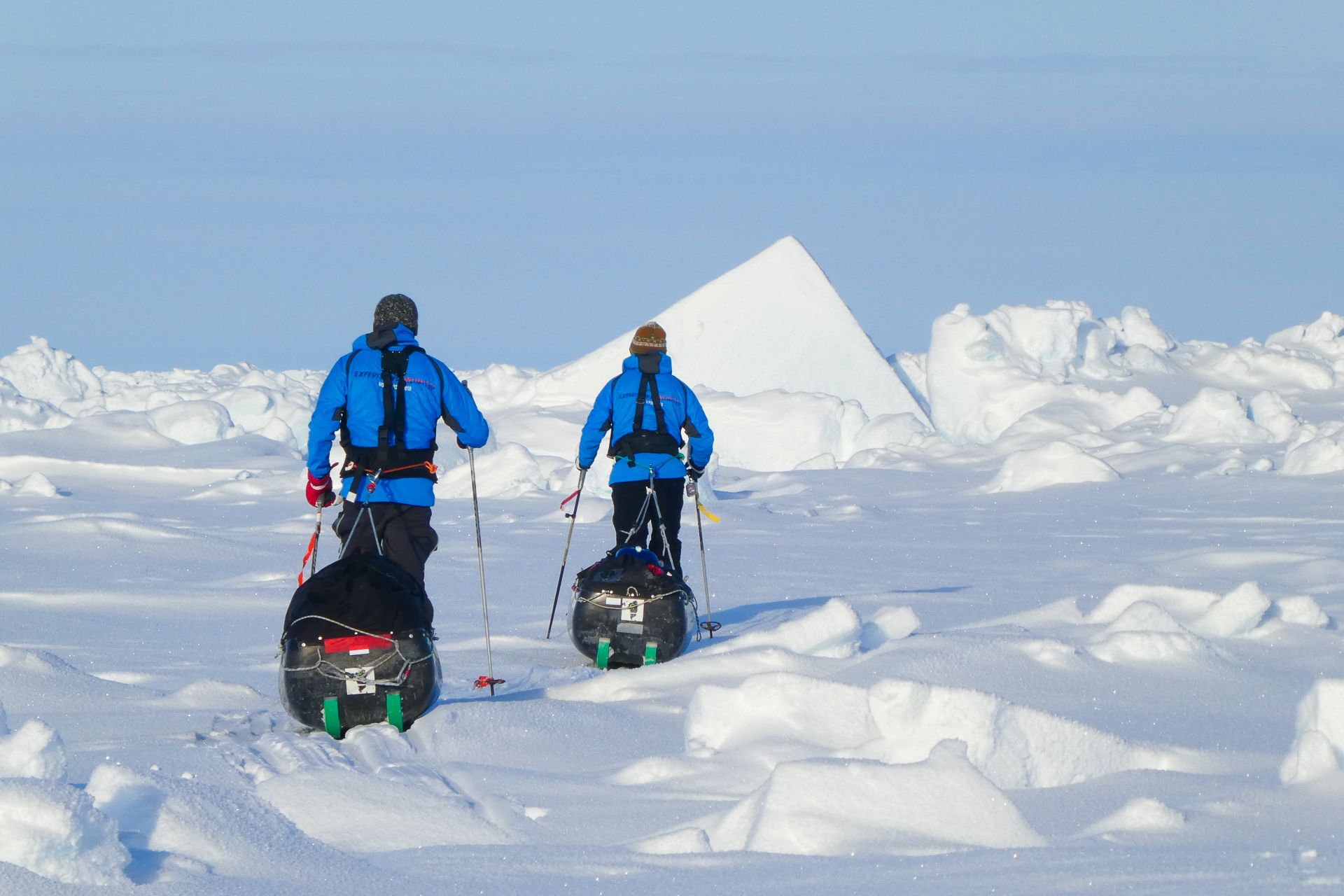
By contrast, major polar expeditions often take place just a few meters above sea level.
Yet they rank among the most demanding undertakings that exist.
Here, there is no comfortable base camp, no fixed infrastructure, no possibility of descending to recover. Every day, participants advance pulling their pulka weighing several tens of kilos, sometimes a hundred, loaded with food, stove fuel and bivouac and personal equipment.
Once committed on the Arctic ice or on the Greenlandic ice sheet, the expedition becomes a journey with no intermediate return possible. Progress must be made at all costs towards the final objective.
The days can sometimes feel similar: skiing, pulling the pulka, setting up camp, melting snow to produce the water needed for survival. Yet each stage brings its share of uncertainties: violent winds, extreme temperatures, ice drift, open water zones, chaotic pack ice terrain. Wildlife represents a unique opportunity to break the external monotony, but it can also represent a threat to the expedition: from the charge of a polar bear to musk ox, to the Arctic fox that comes to gnaw on ropes or tents.
The polar challenge is less explosive than that of high altitude. It is a test of mental and physical endurance that plays out over time.
Two worlds that are more alike than one might imagine
© Eric Bonnem
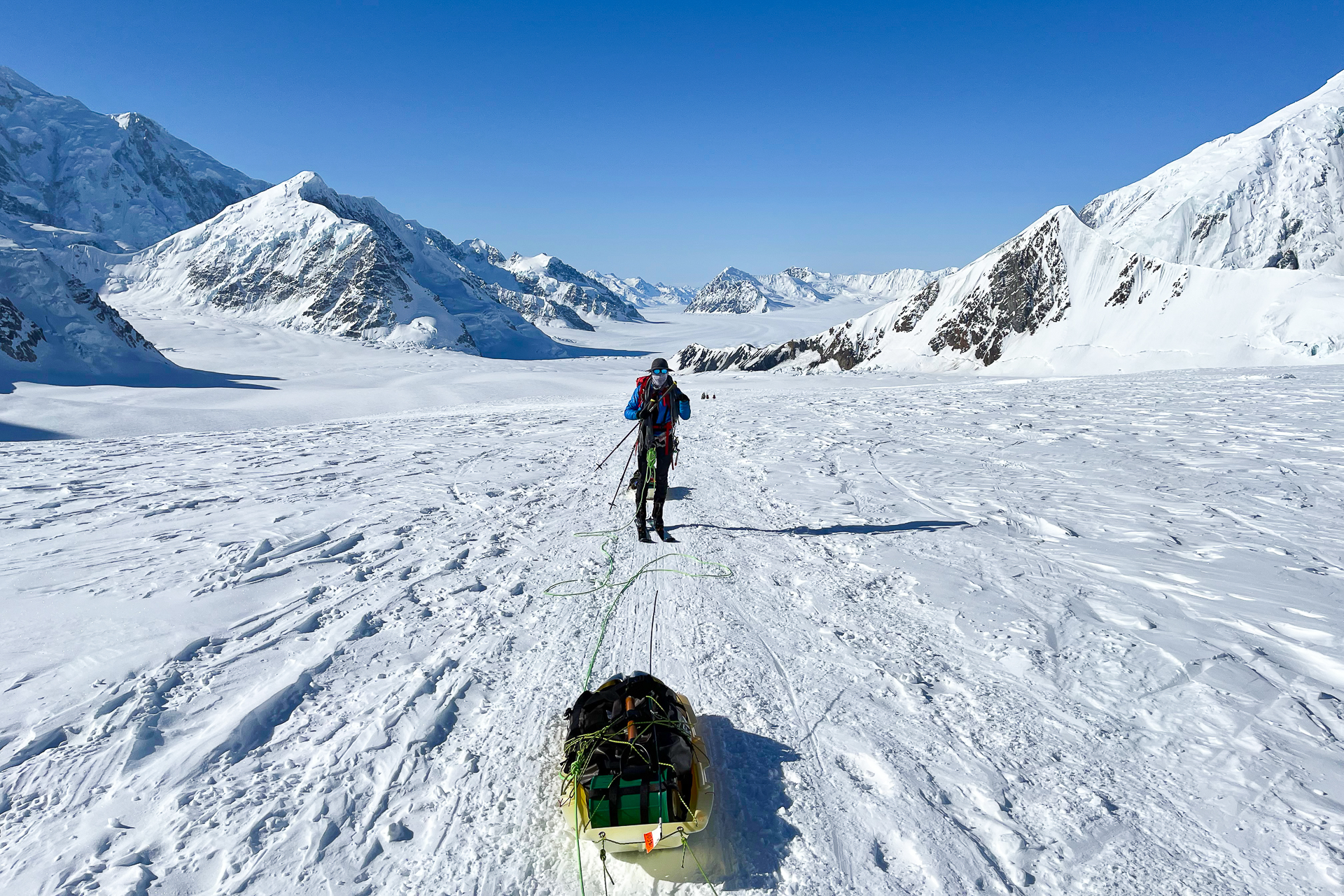
Despite their differences, polar expeditions and high-altitude expeditions have many points in common. Both require serious physical preparation, often over many months.
Both take place in remote environments where self-sufficiency and the ability to deal with the unexpected are essential.
Both require participants to cope with cold, fatigue, a lack of comfort and, sometimes, several weeks far from the rest of the world.
In both cases, success rarely depends on physical ability alone. The capacity to manage one’s energy, make the right decisions and maintain motivation in difficult moments is essential. The guide’s role comes first, followed by the quality of the group’s cohesion, both of which play a decisive part.
Finally, mountains and polar regions offer a privilege that has become rare: the chance to move through spaces that remain largely wild, where humans are merely visitors and where the only trace left behind is that of their footsteps. Despite what outside commentators may say, this remains true, even on Everest or Manaslu.
A fundamental difference: the relationship with the objective
© Eric Bonnem
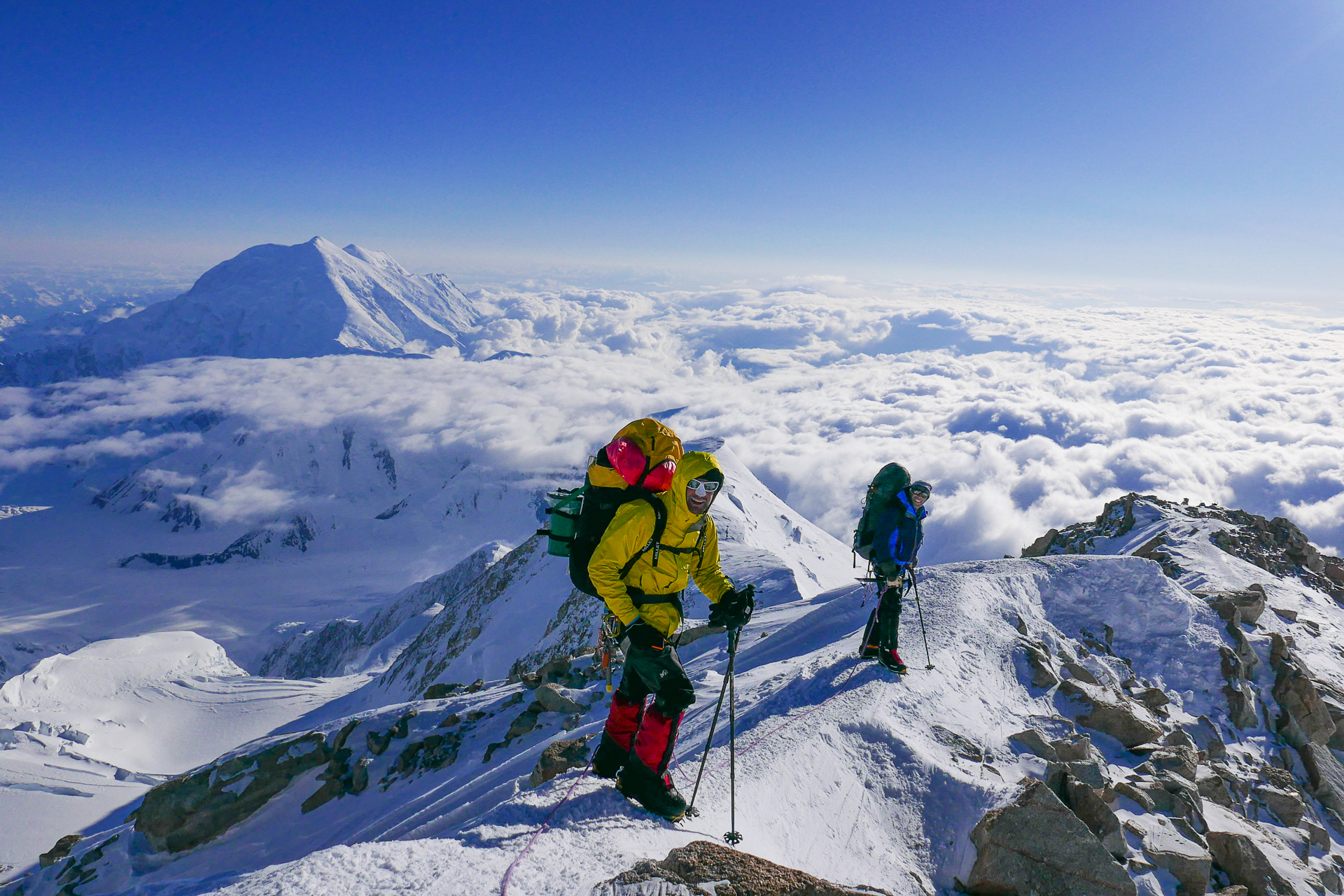
If one were to summarise the main difference between these two worlds, it would perhaps lie in their relationship with progression.
At high altitude, the expedition is based on a back-and-forth logic. You go up, come back down, recover. The summit is only attempted when conditions seem right.
In polar regions, the logic is different. Once the departure is given, progress must continue day after day until the finish. The crossing of Greenland or an expedition to the North Pole does not include a base camp to return to for rest.
This dimension gives polar expeditions a unique sensation of continuous travel, while high altitude remains dominated by the quest for the summit.
An accessible progression for motivated adventurers
© Corentin Dolivet
Contrary to popular belief, neither Everest nor the North Pole are reserved for an elite of supermen. Success rests above all on a coherent and structured progression.
At high altitude, this progression begins with a course in the Alps, then continues on summits of 5000, 6000 and 7000 meters before considering the great 8000 meter peaks.
In the polar world, the journey often begins with courses, winter raids or shorter stays before committing to the high Arctic or Antarctica.
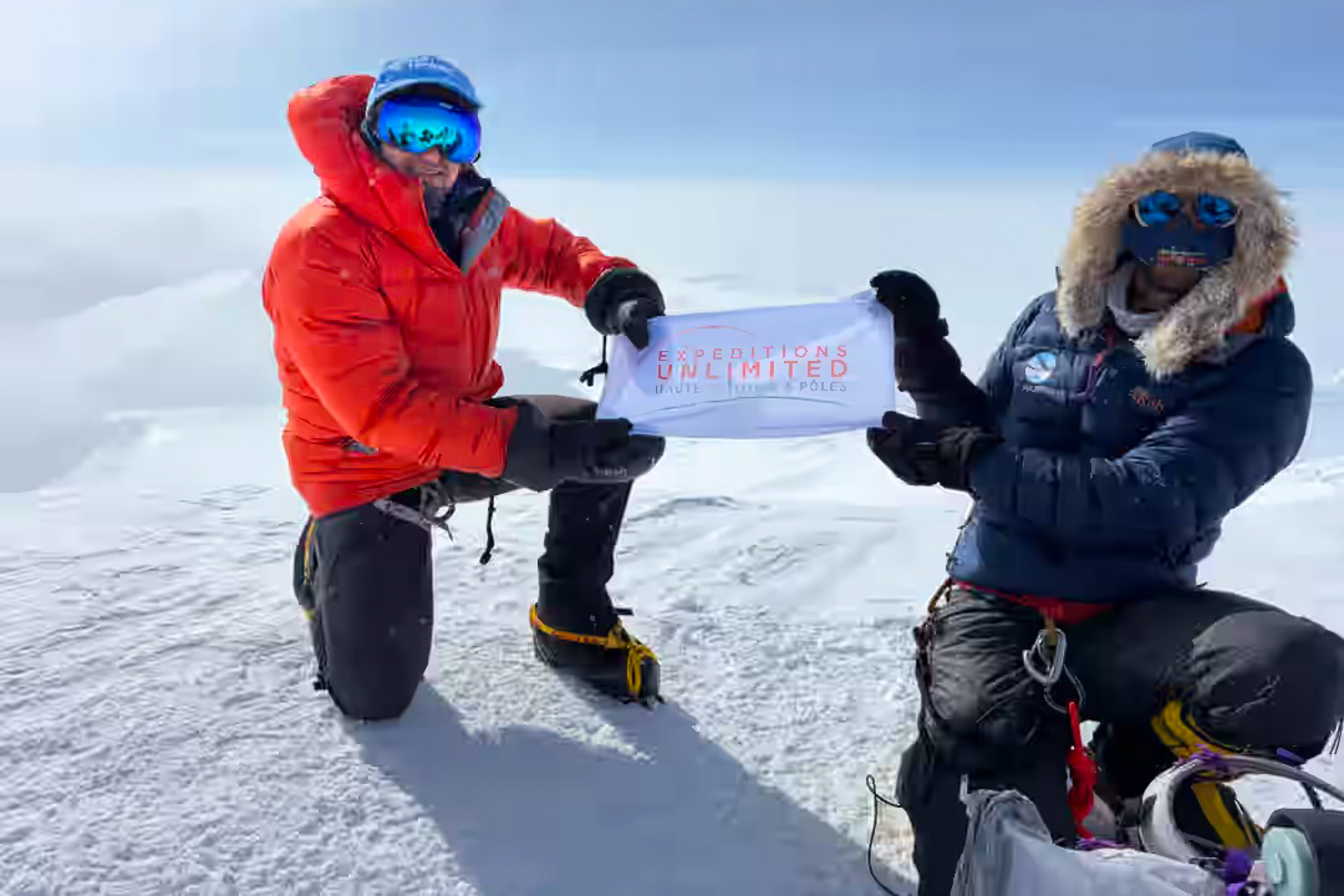
This is precisely the philosophy that Expeditions Unlimited has been developing for more than a decade.
The French-speaking leader in high-altitude expeditions at 7000 and 8000 meters and a globally recognised player in committed polar expeditions, Expeditions Unlimited accompanies its participants in a long-term progression, from their first experiences to the most ambitious objectives.
Whether preparing for the ascent of Everest or building a polar traverse project, every step counts. It is about patiently building the physical, mental and technical resources that will be drawn upon to achieve "one's" holy grail. Each expedition then becomes far more than a sporting objective: it is part of a true journey of personal exploration.
So, what is your next frontier? The highest summits on the planet or the frozen immensities of the polar regions?